The current capital of Bosnia and Herzegovina was founded in the 15th century following the Ottoman conquest of the Balkans. Unlike cities that emerged in the same period elsewhere in Europe, Sarajevo was built without city walls. “At the time, being part of the Ottoman Empire was a sufficient guarantee of security,” says Emir O. Filipović, historian at the University of Sarajevo.
When Emir O. Filipović picks up the phone for this interview about the origins of Sarajevo, the city council of the Bosnian capital had been discussing the very same topic. “The previous city administration considered introducing a new public holiday to mark the city’s foundation, but it’s not that simple,” explains the historian, professor at the University of Sarajevo.
The current Bosnian capital, Filipović continues, was founded in 1462 as a vakuf, a word derived from the Arabic waqf (وقف), denoting, in Islamic law, a pious endowment or an asset dedicated to purposes of public benefit. “The vakuf is an asset that cannot be inherited, permanently dedicated to the purpose for which it was created: it can consist of a mosque, a public bath, a library, a fountain, even a public square. The founder appoints an administrator – often a relative or friend – and the revenues the vakuf generates are used to maintain the structures and fund public services,” Filipović explains.
The first vakuf in Sarajevo was established in 1462 by Isa-beg Isaković, the Ottoman nobleman who had spent decades conquering the Bosnian Kingdom: a castle, a mosque, a bridge, some mills. From there, the city grew. Even the name tells the story: Saraj was the name of the palace built by Isa-beg – hence, Sarajevo.
How did the vakuf system work?
In 1531, the second great vakuf was founded by Gazi Husrev-beg, a nobleman and nephew of the sultan sent to govern the region. Sarajevo then became a true urban and commercial centre. In addition to the grand mosque, which still stands today, Husrev-beg funded a medresa (Quranic school), a library, a public kitchen offering free meals to the poor, and a han – a sort of hotel where merchants could sleep for up to three nights at no cost. All of this was financed by the rents from the Baščaršija, the great bazaar he himself had founded. Craftsmen and traders paid to occupy their spaces, and those revenues covered the salaries of teachers and imams, and the food for the public kitchen. The system functioned, virtually unchanged, until the end of the Second World War.
How did the city develop in the centuries following its foundation?
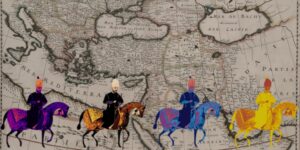
First, it should be said that Sarajevo was not always the capital of Bosnia and Herzegovina. In the late sixteenth century, as military campaigns shifted northward, Banja Luka became the administrative centre. Then Travnik, until the mid-nineteenth century. Sarajevo only became the capital again in 1850–1851. In the meantime, it had gone through one of the most dramatic moments in its history: in 1697, Prince Eugene of Savoy – a remarkable figure, originally destined for a religious career, who instead became the greatest general in Habsburg service and built the Belvedere in Vienna – arrived in Sarajevo and set fire to the city and its mosques, taking the Catholic population with him as he left. It was a devastating blow: Sarajevo lost its prosperity, turned inward, erected walls and stopped building. That attack also marked the end of the long Ottoman expansionary cycle: 1683, with the failed siege of Vienna, had been the turning point, and from then on, the Habsburgs advanced. The Treaty of Carlowitz in 1699 redrew the entire map of the region – Dubrovnik obtained Neum on that occasion, to have a sea outlet independent of Venice. The Habsburgs, however, when they came to govern Bosnia at the end of the nineteenth century, proved pragmatic: they recognised Islamic law and allowed the vakuf system to survive. It was only under the Communist Yugoslav regime after the war that the system was definitively dismantled.
What remains of all this today, walking around Sarajevo?
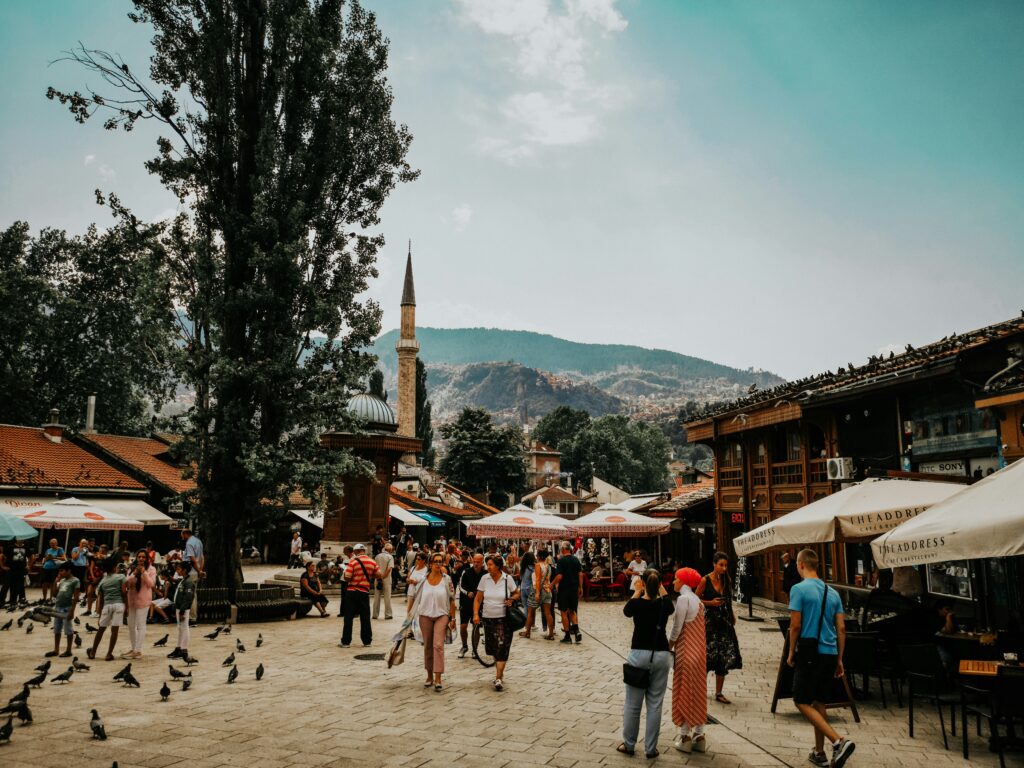
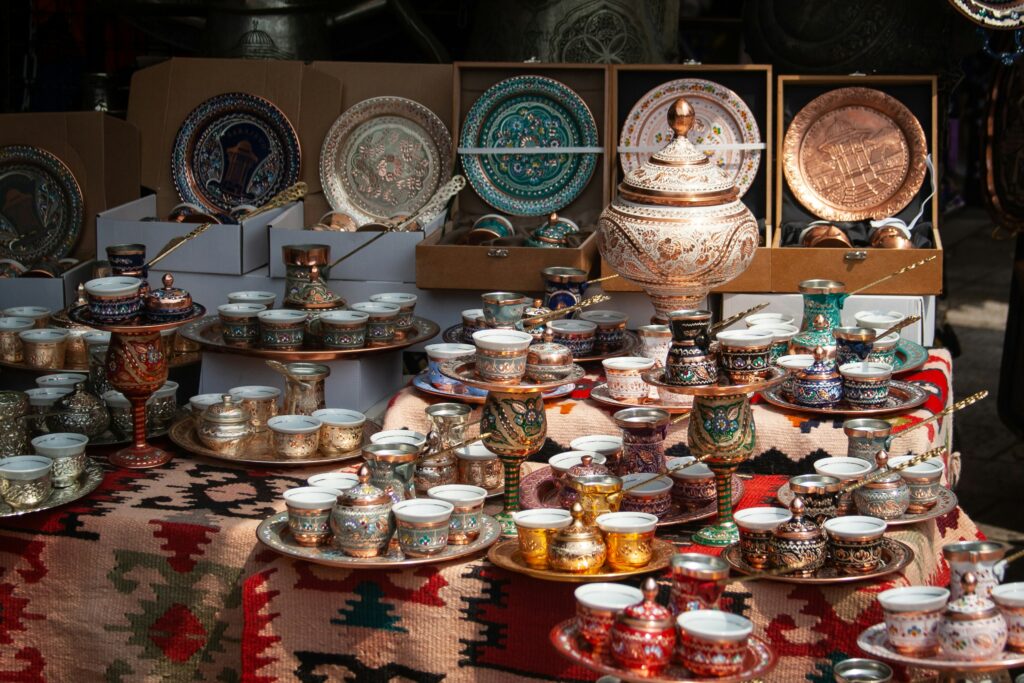
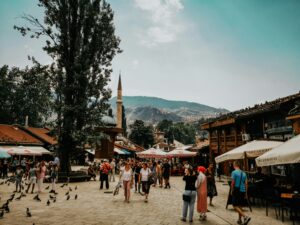
A great deal. The Baščaršija is still the heart of the city, and its streets still bear the names of the old craft guilds: the street of the blacksmiths, the saddlers, the perfumers. A few elderly craftsmen still carry on their trades. At the centre of the bazaar stands the Brusa Bezistan, a covered market whose name betrays the origins of the goods that arrived there: Bursa, in Anatolia, was the last stop on the Silk Road, and the fabrics that travelled that route ended up here, in Sarajevo. Then there is the Husrev-beg Mosque, still in use, with its library. And finally, the clock tower.
The city's foundation is at the centre of a political debate today. Can you explain?
It’s a complicated matter. Sarajevo already has an important date: the 6th of April, the anniversary of its liberation from the fascists in 1945. Now, the previous city administration proposed an initiative to add a foundation date tied to the original vakuf of 1462. The problem is that the document we have, the vakufnama, only specifies that it was written during a ten-day period of a certain month in the Islamic calendar, which roughly corresponds to the period between the 1st and 10th of February. Which day to choose? But the real issue is not a technical one. Some argue that insisting on the Ottoman heritage means overshadowing the antifascist memory. Others point out that Isa-beg Isaković, the founder of the first vakuf, was also the conqueror who terrorised the pre-existing Bosnian population for decades. The medieval Bosnian kingdom had its own parliament, its own currency, its own identity: Mehmed II brought Islam, but he did not arrive in peace. As a historian, I cannot pretend that only the positive side exists, or only the negative. The truth, as is often the case, is much more complex and lies somewhere in between.