Now available: the Habsburg Empire. Ottoman Empire coming soon!

A Walk Through Ottoman Salonica

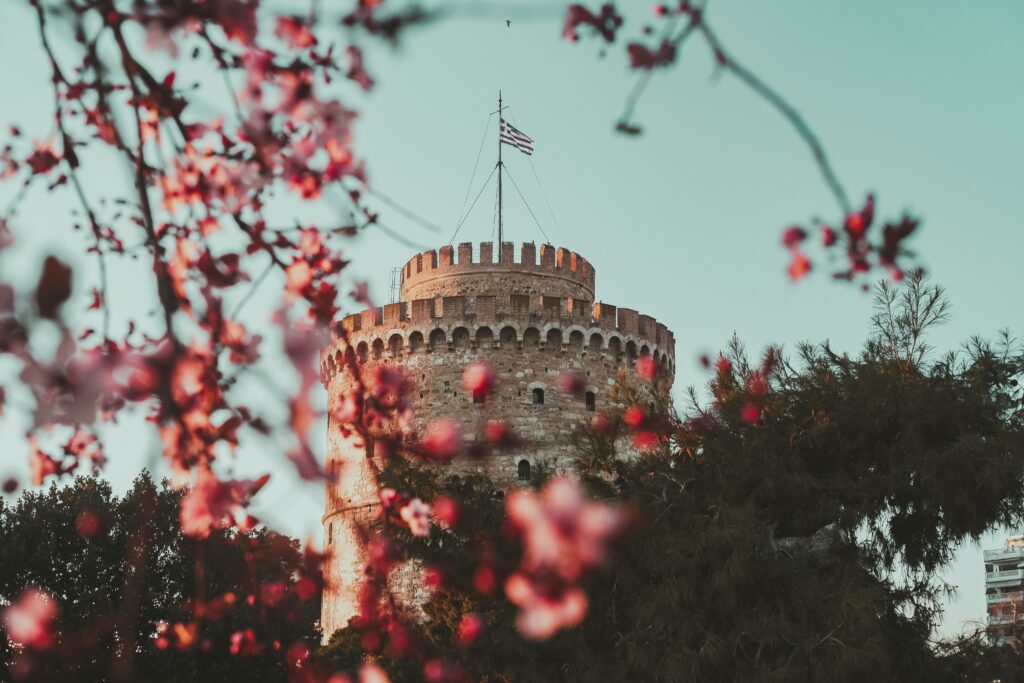
White tower, Thessaloniki © Leandros Papakarmezis / Unsplash

We spoke with Vasiliki Kartsiakli, an archaeologist and co-founder of dot2dot, a Thessaloniki agency designing themed tours of the city, about the traces the Ottomans left in what was, for nearly five centuries, one of the empire’s great cities.

Thessaloniki fell to Murad II in 1430, taken from Venetian control in a siege that, Vasiliki says,” ended after three days”. The point through which the Ottoman troops entered the city can still be identified today, although the tower visible there was built after the Ottoman conquest as part of the later fortifications. Thessaloniki was, she says, “the second most important city of the Ottoman Empire after Constantinople, and its third port” — a hub where Christians, Jews and Muslims lived side by side. In 1912, during the First Balkan War, the city became part of the Greek state; a decade later, the 1923 population exchange between Greece and Turkey sent most Muslim residents away and brought thousands of Orthodox refugees from Asia Minor, reshaping the city again.

The itinerary

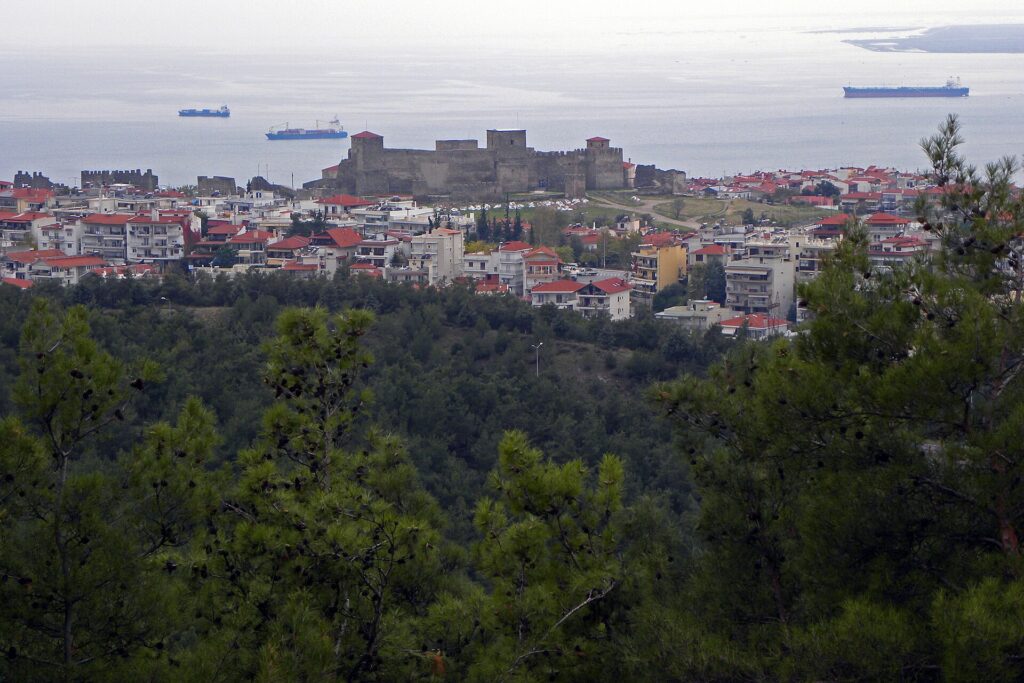
Eptapyrgio and the Upper Town (Ano Poli). Start in the city’s only historically Turkish neighbourhood, perched above the centre with views over the sea. Its Ottoman-Turkish houses — a style seen across the Balkans — climbed the hill for the views and the fortifications’ shelter. Look for old Ottoman fountains, recently restored to running water, and a turbeh, an elegant domed tomb once part of a monastery.

Walk down towards Egnatia street: ~25 minutes.

Eptapyrgion Fortress, Thessaloniki. By EntaXoyas, CC BY-SA 3.0, Wikimedia

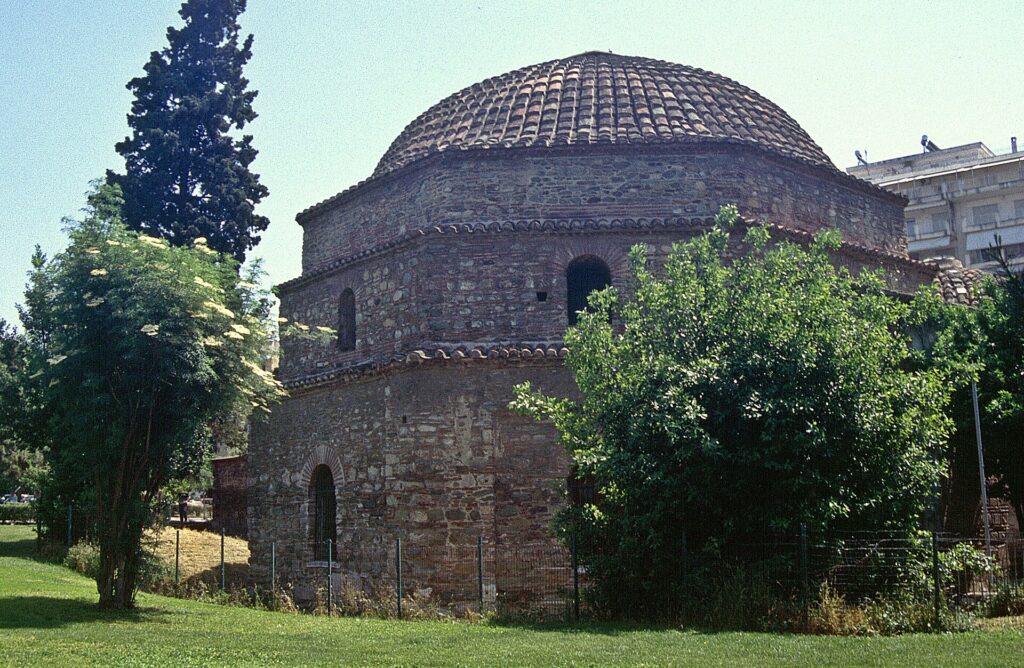
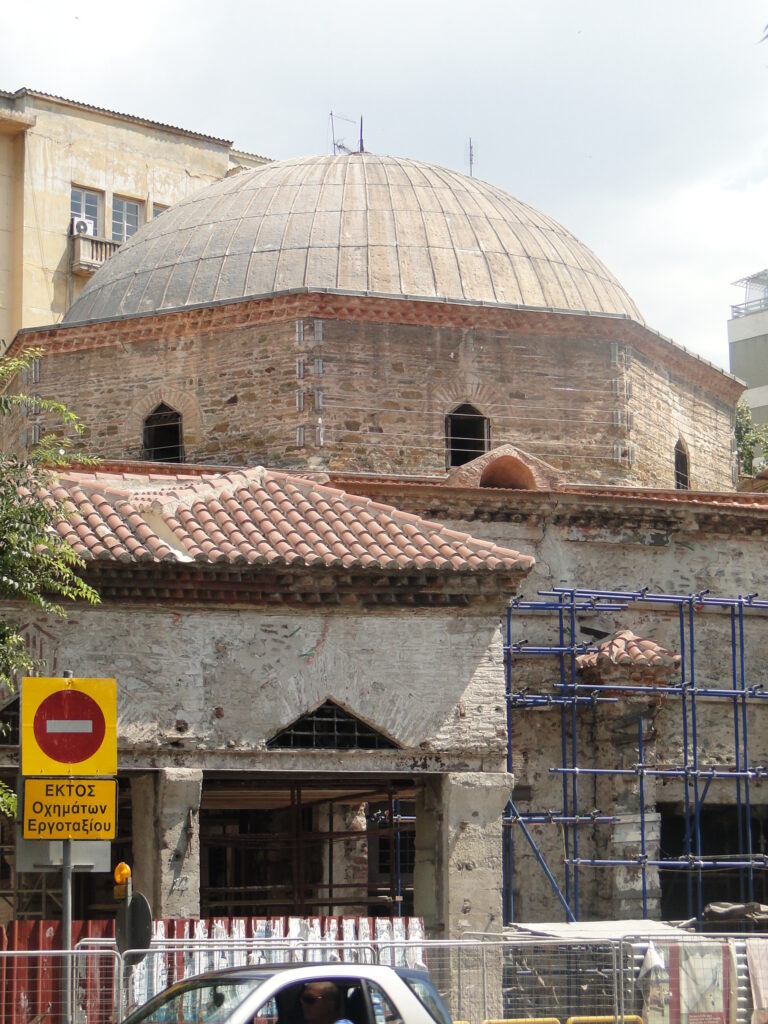
Bey Hamam. Ordered by Murad II and completed in 1444, this is the largest surviving Ottoman bathhouse in Greece, with separate wings for men and women — and, Vasiliki says, “one room that was only for the Sultan.” A hamam was never just a bath — it was where the city talked, gossiped and did business, a bit like a café today. Closed for decades, it is now open again, as a monument.

5 minutes on.

Bey Hamam, By Ziegler175 - Own work, CC BY-SA 3.0, Wikimedia

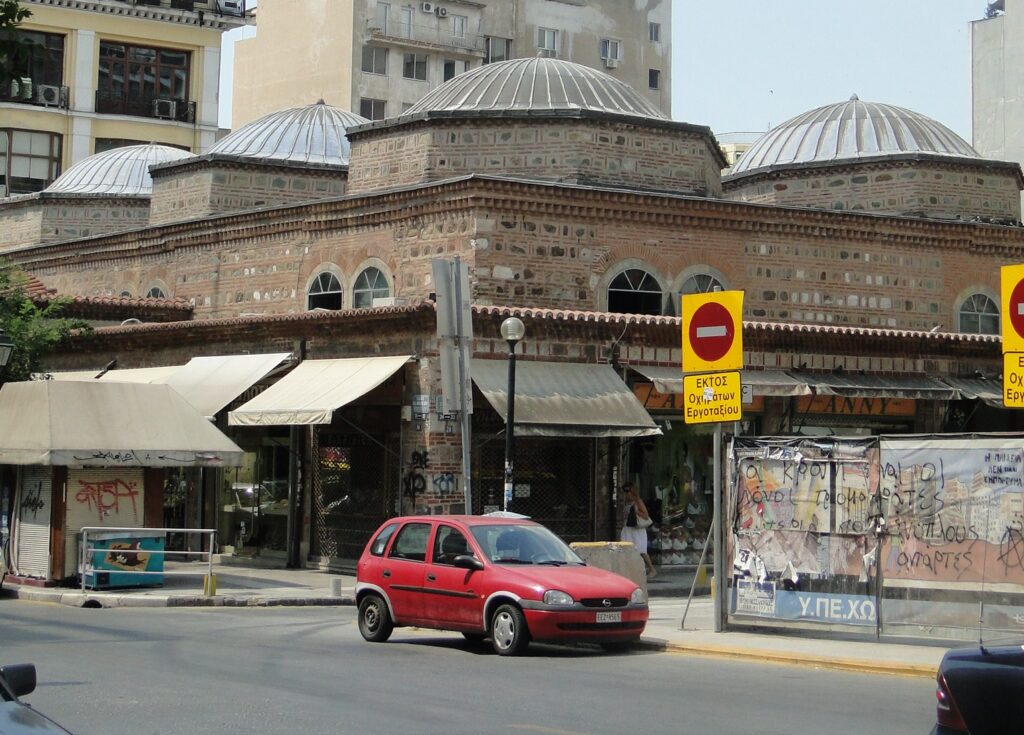
Bezesteni. This domed, covered market takes its name from a Persian word for cloth. Merchants traded fine fabrics here, but the bezesteni apart from its other uses, it also functioned as a kind of bank, where people could deposit jewellery and important documents. Ottoman travel writers sorted cities into those with a bezesteni and those without — Thessaloniki had one, and its surrounding streets grew into a commercial district of their own.

3 minutes on.

Bezesteni, By Knop92 - Own work, Public Domain, Wikimedia

Hamza Bey Mosque. Built in 1467, the oldest surviving mosque in the city and the first monument of its neighbourhood — together with the bezesteni and a hamam, a textbook Ottoman trio: market, bath, mosque. It later had a very different life as a cinema, the Alkazar, a name many locals still use.

~18 minutes north to the Rotunda.

Hamza Bey Mosque, Thessaloniki, By Knop92 - Own work, Public Domain, Wikimedia

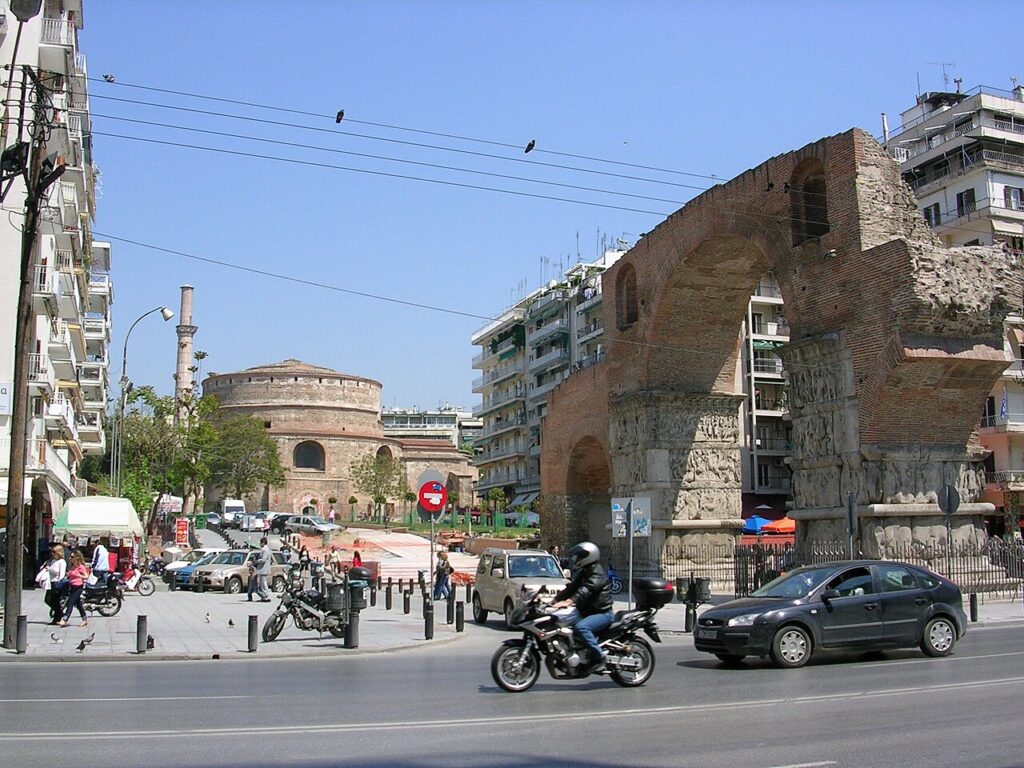
The Rotunda. A Roman rotunda, later a Byzantine church, later an Ottoman mosque. “Twenty-six minarets were torn down in the ’20s,” Vasiliki says. “Only this one survived” — already read as a multicultural monument in its own right.

~15 minutes east to the waterfront.

The Arch of Galerius and the Rotunda, by Testus - Own work, CC BY-SA 3.0, Wikimedia

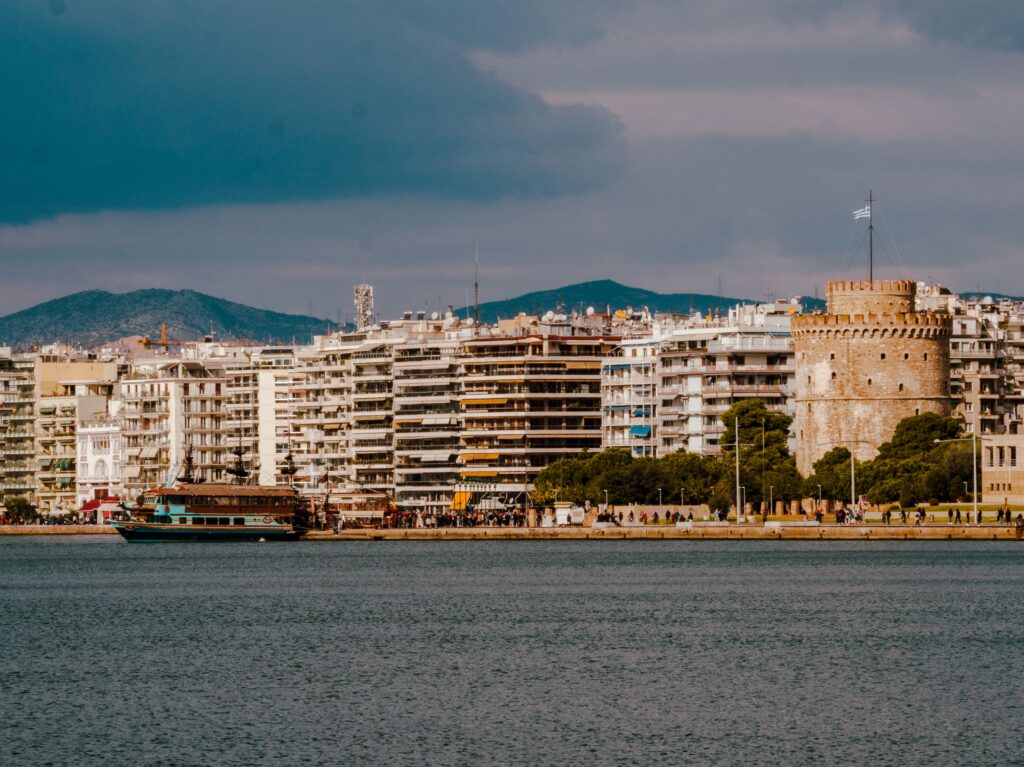
The White Tower. The Ottoman fortification tower that once anchored the sea walls — the walls came down in 1869, but the tower stayed standing. Today it houses a six-floor museum on the city’s history; one popular story claims a prisoner won his freedom by painting its blood-stained walls white — a legend historians treat with scepticism, since old photos already show it pale before that.

From here it’s worth continuing to the port and Ladadika: under Abdul Hamid II the creation of the Port and its facilities was a fact (1896-1910), and around 1910 an elegant customs house — the city’s first concrete building — opened where dockworkers, many Jewish, once unloaded ships arriving daily from Europe.

Thessaloniki and the White Tower, George Zografidis, Pexels

Total walking time: just over an hour; allow about three hours door to door with visits to the hamam, the mosque, the Rotunda and the tower’s museum.

An inheritance more felt than named

The most surprising part of Ottoman Thessaloniki, Vasiliki says, isn’t the monuments — it’s everything nobody thinks of as Ottoman at all. “People may not feel they have a connection with Ottoman heritage, but they are connected,” she said. “Food, coffee, the time we spend in cafés, the Turkish words in everyday Greek — this heritage is something people here experience far more than they consciously recognise. After 1912, there was a mindset that everything Turkish had to be erased.”

That erasure shaped the monuments; it never reached the kitchens. What Greeks call Greek coffee is Turkish coffee by another name. “Baklava, dolmades, imam bayildi, even moussaka — they all all reflect Ottoman and wider Eastern Mediterranean influences,” Vasiliki says, alongside a vocabulary, Turkish words and place names, such as bahçe, pazari and tsinari, have become part of everyday Greek. Rebetiko is subtler: not an Ottoman survival outright, but a fusion born after 1922, when refugees from Smyrna — a cosmopolitan Ottoman city in its own right — brought Asia Minor melodies and Black Sea and Balkan influences, mixing them with melodies they encountered among the people of Thessaloniki, including in its ports and prisons. Since the 1990s, heritage authorities have leaned the other way, restoring rather than erasing — proof this past, unrecognised or not, never left the table.

Like what you read? Every month we send stories like this one — from countries that no longer exist. Subscribe to our newsletter and get a free sample chapter of our Republic of Venice guide.