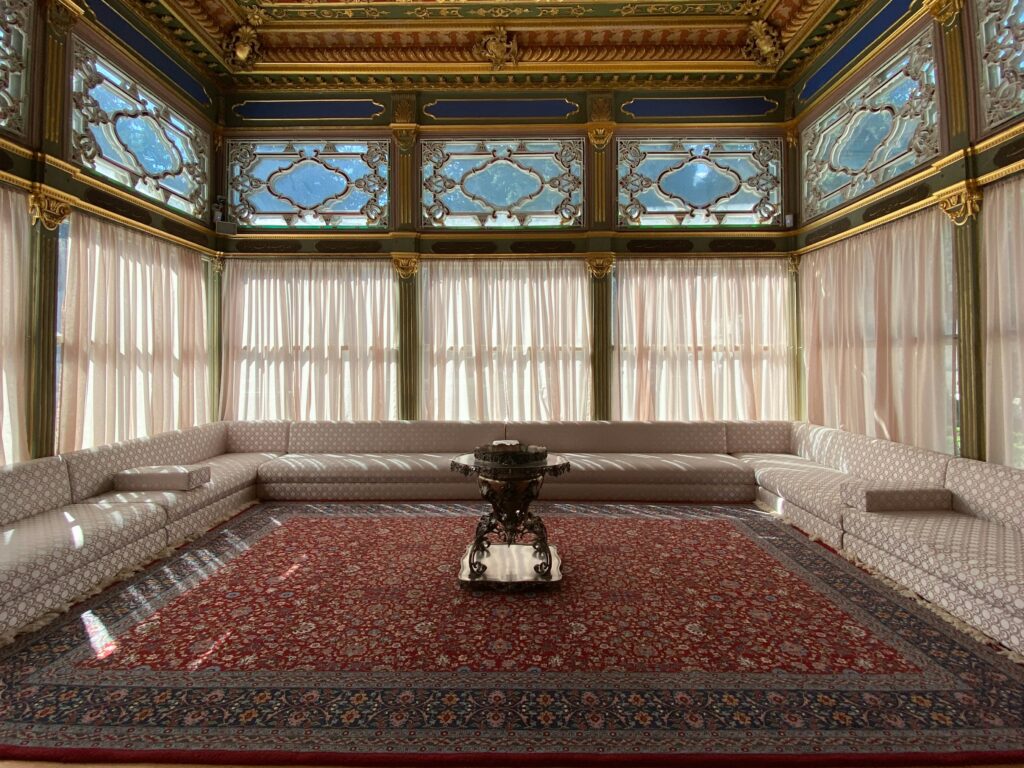
Our recent article, “The Ottoman Empire: A European History,” sparked a lively online debate, drawing criticism from those who view Ottoman history as something “far removed” from Europe. We selected six myths encountered in the comments or circulating online in discussions of the Ottoman Empire, and asked cultural anthropologist Jeremy F. Walton—who coordinates the ERC REVENANT project (Revivals of Empire: Nostalgia, Amnesia, Tribulation) at the University of Rijeka—to explain why these myths are false.
Like any past state—imperial, national, or otherwise—the Ottoman Empire is the object of a kaleidoscopic variety of collective memories in the present, ranging from pomp, pride, and celebration to condemnation and denigration. Over twenty-five contemporary countries, stretching across three continents, can lay claim to the title “post-Ottoman”—a staggering mosaic that defies any single cultural memory of the empire. One of the overarching aims of our project, REVENANT—Revivals of Empire: Nostalgia, Amnesia, Tribulation, is to shed light on this multiplicity of collective memories of the Ottomans in the context of other postimperial memories, especially those of the Habsburg and Romanov Empires. For this reason, the Balkan peninsula is a privileged and principal site for our research.
In general, REVENANT adopts a methodologically neutral or “agnostic” approach to collective memories of the Ottomans and other empires—whether or not post-Ottoman collective memories are adequate representations of the political, social, and cultural forms and practices of the empire is not of central importance to our research. On the other hand, we are sensitive to the ways in which collective memories become instruments of political power in the present, especially when they involve clear distortions of the past. In this sense, many collective memories of the Ottomans qualify as “myths”: persistent, even commonsensical perceptions of the past that persist despite their objective falsehood. The Balkans—a geography notorious for its multiplicity of dissenting national histories and visions of the past—is especially fertile terrain for political myths of the Ottoman Empire, as historians such as Maria Todorova have argued for many years.
For this edition of the Extinguished Countries blog, I have been asked to consider six familiar myths about the Ottoman Empire in the Balkans and Europe. I will do so one by one, although, as will become clear, many of the myths bleed into one another. Myths, like collective memories in general, are rarely isolated—they form constellations and mutually entail one another.
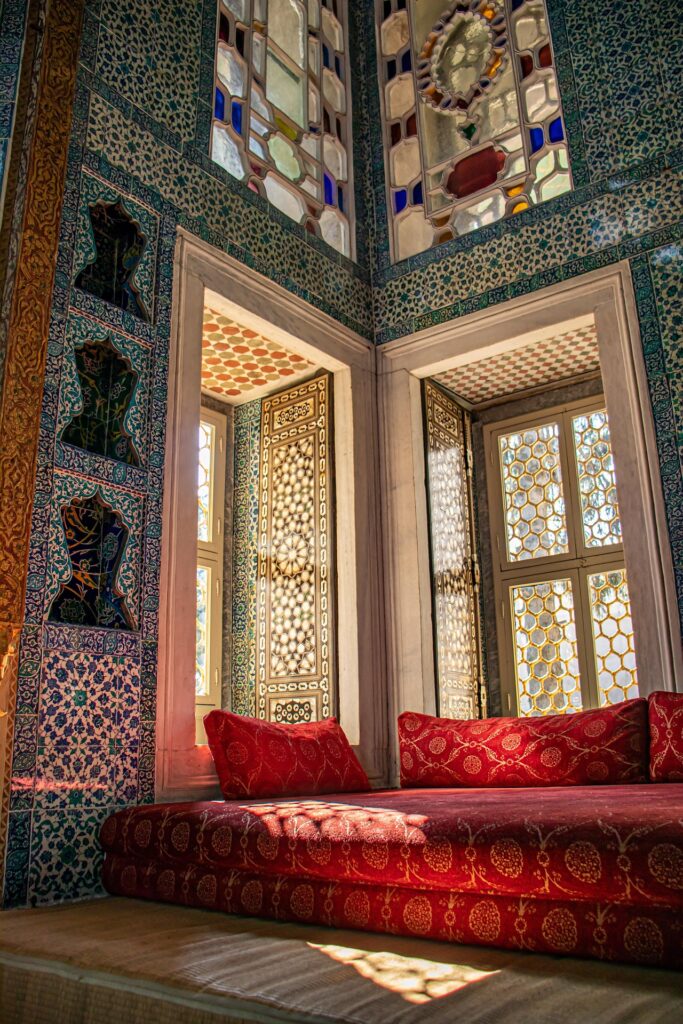
Beginning in the early 19th Century, a dismissive medical metaphor cemented the notion of the Ottoman Empire’s disfunction: the empire was known as “the Sick Man of Europe.” Tellingly, this phrase is frequently attributed to Romanov Tsar Nicolas I, suggesting its origins in the inter-imperial rivalries of “the Great Game.” The notion of the Ottoman Empire as an enfeebled invalid both built on and transformed earlier images of Muslims and Turks as the definitive civilizational enemies of “Christian Europe,” dating back to the Crusades, if not earlier.
Early social scientists also played their part in consolidating the idea of the Ottomans as backward and barbaric. In particular, Montesquieu’s notion of “Oriental despotism” and Marx’s concept of an “Asiatic mode of production” supplemented politically-vested distinctions between “Enlightened,” “modern” European empires and the Ottomans.
Unsurprisingly, stereotypes of backwardness and barbarity tell us almost nothing about how Ottomans lived and governed; nor do they offer an adequate historical explanation of the Empire’s dismantling after World War I. They are entirely concepts rooted in largely western European self-understandings, which should be understood as part of the broader apparatus of Orientalism that Edward Said memorably interrogated.
While Orientalism as a whole continues to saturate collective memories of the Ottomans in Europe, the idea that the Empire was exclusively military—and especially belligerent—is characteristic of a more specific discourse, what anthropologist Andre Gingrich has called “frontier Orientalism.” Unlike Edward Said’s classic notion of Orientalism, which emphasized the exotic and even eroticized qualities of “the East,” frontier Orientalism focuses on the military and civilizational threat of the Muslim/Ottoman Other. Accordingly, it is highly masculinized and characteristic of political cultures along former frontiers, especially the erstwhile Military Border (Militärgrenze) between the Habsburgs and the Ottomans, which straddled the Balkans.
Military campaigns and conquest were undoubtedly central to Ottoman dynastic power for many centuries, and it is understandable that certain features of Ottoman military practice remain key sites of memory among the ancestors of Balkan communities that suffered from them—notably, the notorious devşirme system through which Christian boys were forcefully removed from their families, converted to Islam, and trained as part of the Janissary corps. Nonetheless, the contention that the Ottoman Empire was exclusively or predominantly a martial state devoted to military subjugation is a myth for at least two reasons.
First, it obscures and occludes the staggering plurality of Ottoman sociocultural life, much of which was tangential to military matters.
Secondly, and more darkly, the myth of the Ottomans as a looming military threat dovetails directly with contemporary Islamophobia and the attempt to erect both literal and metaphorical walls between “Europe” and its Others, especially Muslims. It is no coincidence that one of the most prominent rightwing white supremacist websites is named “The Gates of Vienna,” in commemoration of the defense of Vienna against the Ottomans during the Siege of 1683. Here, we witness a chilling, vivid recasting of the complicated inter-imperial politics of early modern Europe to serve the needs of an exclusionary, racist political culture in the present.
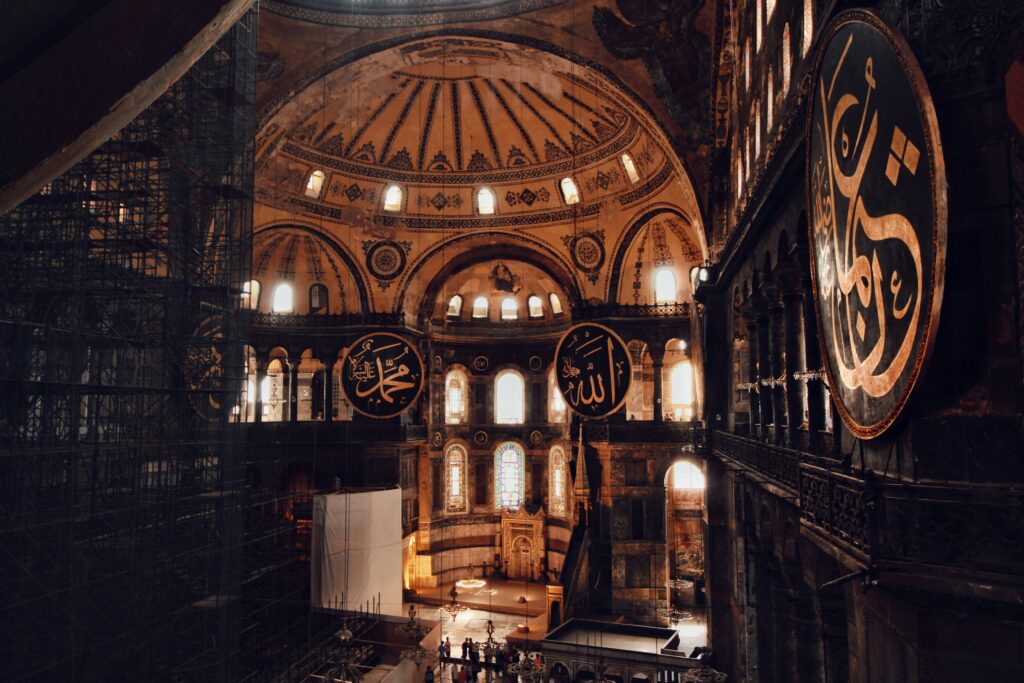
The notion that the empire was a prison-house for non-Muslim subjects is closely related to the myth of unquenchable Ottoman military will to conquest. As with most myths, there are kernels of historical truth here—in particular, anyone who has read deeply on the Armenian Genocide, not to mention a litany of other instances of Ottoman state-sponsored violence against Christians, Jews, and non-Sunni Muslims such as Kızıbaş Alevis, is well aware that Ottoman imperial power often entailed dire consequences for non-Muslims.
Nevertheless, the notion that the empire uniformly and universally persecuted its non-Muslim subjects is simply false. As historians such as Karen Barkey have argued persuasively, the Ottoman political and economic system operated through cultivating differences, especially religious differences, and consequently granted substantial communal privileges to non-Muslims. The well-known millet system, according to which Orthodox, Armenian and Jewish communities largely regulated their own affairs, is the most famous example of Ottoman acquiescence to and capitalization on, rather than persecution of, religious difference. Simultaneously, historians have also demonstrated that non-Muslims often had recourse to both religious (Islamic) and civil Ottoman law to address disputes within their communities when intracommunal mediation failed. All of this changed radically during the 19th Century and the Tanizmat, a period of modernizing reforms that aimed to establish a form of European-like citizenship. Notably, it was in the aftermath of these liberalizing reforms that much of the worst violence against non-Muslims in the empire occurred. In short, the situation for both non-Muslims and Muslims in the empire varied extremely across time, space, and class, while the myth that non-Muslims were constant objects of persecution is largely a product of anti-Ottoman nationalist historiography, especially in the Balkans.
Get more stories like this one by subscribing to our monthly newsletter. You’ll also be informed when our new guidebook to the Ottoman Empire is available!
A crucial aspect of the myth that the Ottoman Empire was barbaric and backwards stems from western European fascination, envy, and disgust for “the Grand Turk,” the sultan. As I mentioned above, the notion of “Oriental despotism” was a key element in the toolkit of emergent Enlightenment-era political philosophy, which—especially after 1789—sought to establish the unique legitimacy of republicanism and decry dynastic monarchy. In this sense, the myth the sultan was an absolute despot had much more to do with political debates in western Europe than with the Ottomans themselves—as historian Noel Malcolm, in particular, has demonstrated. The “omnipotent sultan” was a convenient stand-in for criticism of a variety of rulers, ranging from Louis XIV to various Popes. Of course, the internal politics of the empire—including the jockeying for preference among dynastic heirs and ambitious pashas, the intrigues of the harem, and the complicated intercommunal arrangements of the millets—all exceeded the scope of a single potentate’s control. While the sultan certainly did possess an ideological monopoly on power for much of the empire’s history, this ideological supremacy was tempered by practical limitations. Furthermore, even this changed in the 19th Century, with the introduction of modernizing and liberalizing reforms during the Tanzimat. Tellingly, Sultan Abdulhamid II, who put an end to the Tanzimat by revoking the first Ottoman constitution in 1878 and reintroduced a version of sultanic absolutism, was ultimately removed from power in a coup by the Young Turks in 1908. Even before the end of the empire itself, the sultanate was reduced to little more than a figurehead.
Like the previous myths about the Ottomans, the notion that women were entirely subordinate and had no role to play in Ottoman life is chiefly the product of anachronistic judgments. Although official political power in the empire was entirely masculinized—women could not hold titles such as bey or pasha, much less become the sultan, nor could they serve in the military or as kadis, judges—this was effectively true for most, if not all, late Medieval and early modern European states and empires. More importantly, women could and did wield political power in more subtle ways.
The Valide Sultanlar, mothers of the reigning sultans, were especially formidable figures—their experience in negotiating the fraught politics of the harem in the campaigns to assure their sons’ ascendance to the throne established them as power brokers during their sons’ reigns.
The sultan’s favorite wives and courtesans could also accrue exceptional power. Most famously, Roxelana/Hürrem Sultan, Sultan Süleyman’s favorite wife and the mother of his successor, Selim II, had a long, enviable political career in the 16th century.
Women also exerted power through charitable endowments—for instance, Mihrimah Sultan, Süleyman’s daughter, sponsored several important architectural and infrastructural projects in Constantinople, including the eponymous Mihrimah Sultan Mosque, one of the masterpieces of the preeminent Ottoman architect, Mimar Sinan. And while women were largely absent from public life in the empire—again, not unlike most European societies until the 18th or 19th C.—they nonetheless had rights as property owners according to Sunni Hanafi Islamic law, and exerted influence on myriad aspects of Ottoman society in subtle but pervasive ways.
Here, we return to the myth of “the Sick Man of Europe” with which we began. A keen irony shadows critical historiography of the Ottoman Empire in 19th and early 20th centuries: the complicated diplomatic, military and political-economic contradictions and dilemmas that weakened the empire were less a result of its “traditional” structures than its attempt to mimic western and central European states and empires. This is a vast field of scholarship and debate, far beyond my confines here—minimally we should note that the image of the Ottomans as decadent and incapable was an ideological projection by their rivals and enemies, supplemented by a strong dose of Orientalism. The multiple effects of the inter-imperial “Great Game” in the latter half of the 19th Century curtailed and recalibrated Ottoman politics both within and beyond the empire, especially in diplomatic realms. Rather than decadence and incapacity, however, Ottoman political culture was highly volatile in the years prior to the end of the empire. The period of radical reforms under the Young Turk Committee for Union and Progress was scarcely half-a decade old when Gavrilo Princip triggered World War I in Sarajevo with the assassination of Franz Ferdinand—an event that, despite its roots in the calcification of the Ottoman-era system religious-political difference in the Balkans, was not directly related to the empire at the time. Had World War I not taken place, or had it taken place differently, the narrative of Ottoman decline and collapse would no doubt be substantially different.
Generally, myths more accurately reflect their makers than their objects. In the case of the Ottoman Empire, a constellation of pervasive, negative myths persists for two interrelated reasons. First, as I have noted on multiple occasions, is the pervasive role of Orientalism—especially frontier Orientalism—in shaping collective memory of the Ottomans today, both in the Balkans and beyond. Deeply embedded Orientalist premises intersect with the second major discursive formation that structures images of the Ottomans, Turks and Muslims in general: liberalism. Perhaps ironically, liberalism is often a handmaiden of both Orientalism and Islamophobia, especially in western Europe, because it sanctions anachronistic judgments about complicated pasts. Political practices and structures, the place of “minorities,” and the role of women in Ottoman society did not meet contemporary liberal standards. But nor did they in most other polities and societies at the time. To the degree that myths about the Ottomans remain potent today, they are symptomatic of not only Orientalism’s endurance, but also of fundamental contradictions in liberalism’s relationship to pasts that inevitably fail to satisfy liberal expectations.
Jeremy F. Walton
Research Group Leader
REVENANT–Revivals of Empire: Nostalgia, Amnesia, Tribulation
ERC Consolidator Grant # 101002908
Odsjek za kulturalne studije – Department of Cultural Studies
Filozofski fakultet u Rijeci – Faculty of Humanities and Social Sciences
Sveučilište u Rijeci – University of Rijeka, Croatia

Like what you read? Every month we send stories like this one — from countries that no longer exist. Subscribe to our newsletter and get a free sample chapter of our Republic of Venice guide.