
St Nicholas Fortress in Šibenik
Extinguished country: Republic of Venice Fortresses
What remains
The 16th-century fortress at the mouth of the St Anthony Channel, UNESCO World Heritage Site since 2017, never touched by a siege.
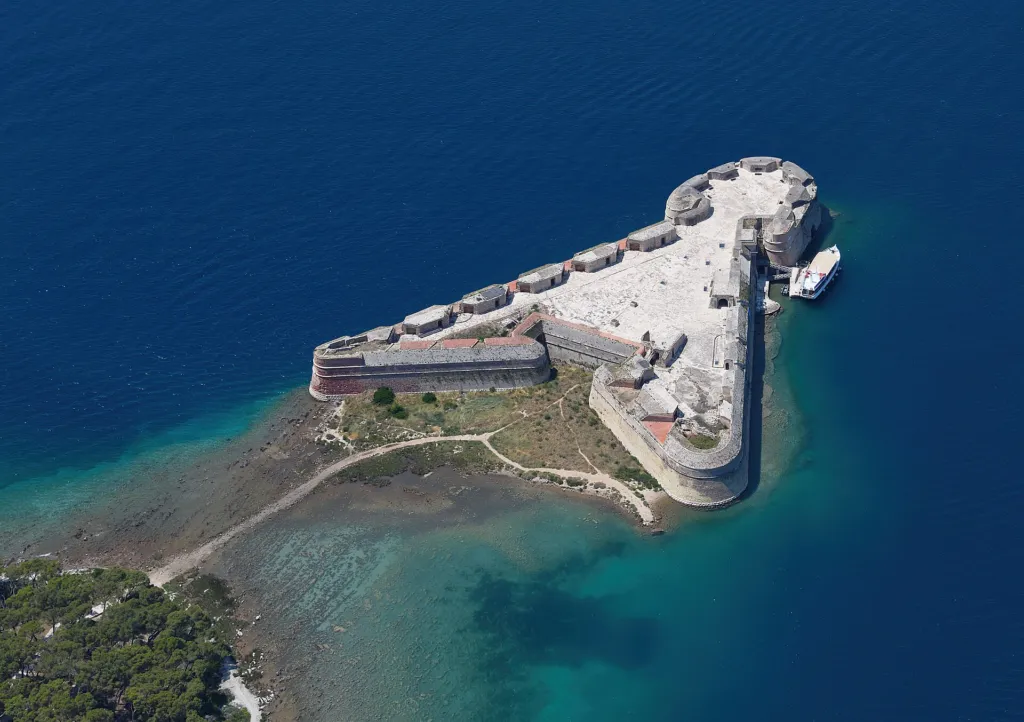
Tvrđava sv. Nikole · Photo: Carsten Steger, CC BY-SA 4.0, via Wikimedia Commons
A triangular fortress that seems to float at the mouth of a channel: St Nicholas is the image we chose for the cover of our book on the Republic of Venice, and one of the most spectacular monuments on the Croatian coast.
A city that resisted Venice
Šibenik is different from the other Dalmatian cities: “Almost all of them are of Greek and Roman origin. This city, by contrast, was born in the Middle Ages, after the arrival of the Slavic populations on the coast,” explains the historian Ante Skelin in the book. Loyal to the Hungarian crown, it was sacked by the Venetians in 1378. And when Dalmatia passed to the Serenissima in 1409, the city refused to recognise the doge: the siege lasted 38 months, until 1412.
The people of Šibenik would never be pro-Venetian, but always anti-Ottoman.
Ante Skelin, historian from Šibenik, interviewed for the book
Salt for the sultan’s subjects
Faced with the Ottoman threat, Šibenik became a Venetian stronghold that would withstand every siege. But the neighbouring empire was both an enemy and a customer: from 1525 Šibenik was the only Dalmatian port authorised by Venice to sell salt to the Balkan hinterland. Hundreds of Ottoman subjects came to buy it outside the city, at the “gabela” on the Mandalina peninsula, bringing grain, meat and cheese.
To protect the approach to the harbour, in the mid-sixteenth century Venice built a fortress on the islet at the entrance to the St Anthony Channel, designed by Giangirolamo Sanmicheli, nephew of the more famous Michele, who designed the Land Gate in Zadar. It is one of Šibenik’s four fortresses and, like Palmanova, it was never used in war.
The traces
The fortress preserves its white stone walls, with the lion of St Mark above the sea entrance. Since 2017 it has been part of the UNESCO site of the Venetian works of defence, together with the walls of Bergamo. From the Venetian period, the other fortresses above the city also remain, along with the Cathedral of St James, a World Heritage Site, and a large cistern from 1453 that now houses a cultural centre.
A Slavic and Venetian city
Long left out of the main tourist routes, Šibenik, “the most Slavic city in Dalmatia”, is now betting on a more thoughtful kind of tourism, in which the fortresses have become venues for concerts, events and food. The Venetian heritage also survives in the dialect, where rubbish is still škovace and a chair katriga. Restored, St Nicholas can be visited by boat from Šibenik, or admired from the path that runs along the channel. In the book you will also find the story of the bagatin, the coin that recalls the first Croatian municipality authorised to mint its own.
A diachronic map with indicative borders: it shows territories held at different times, based on the map in our book. It is not meant as a precise historical map.
In the book
Republic of Venice — Chapter “Croatia”
Prices on 10 Sep 2026: paperback 25,00 € · eBook 15,26 €
Continue the journey
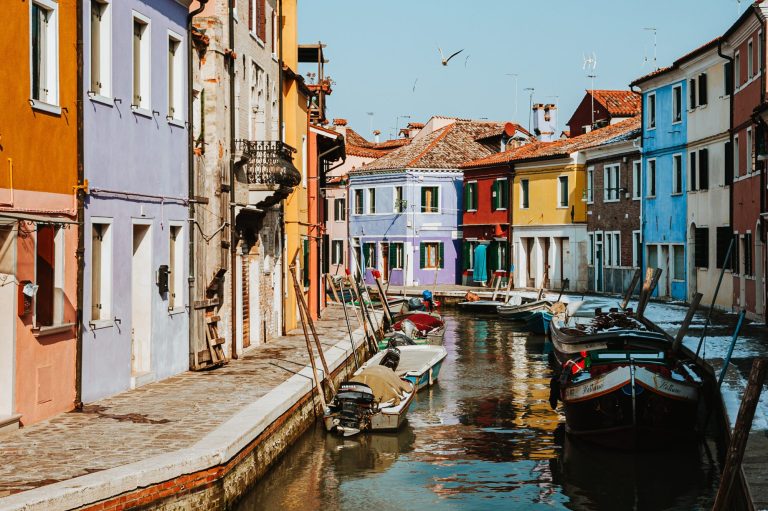 Our guided group tour across the Republic of Venice
 10 years of Kliofest
Extinguished Countries is a collaborative project. Have you spotted any inaccuracies or errors in this page? Write to us at explore [at] extinguishedcountries [dot] com