
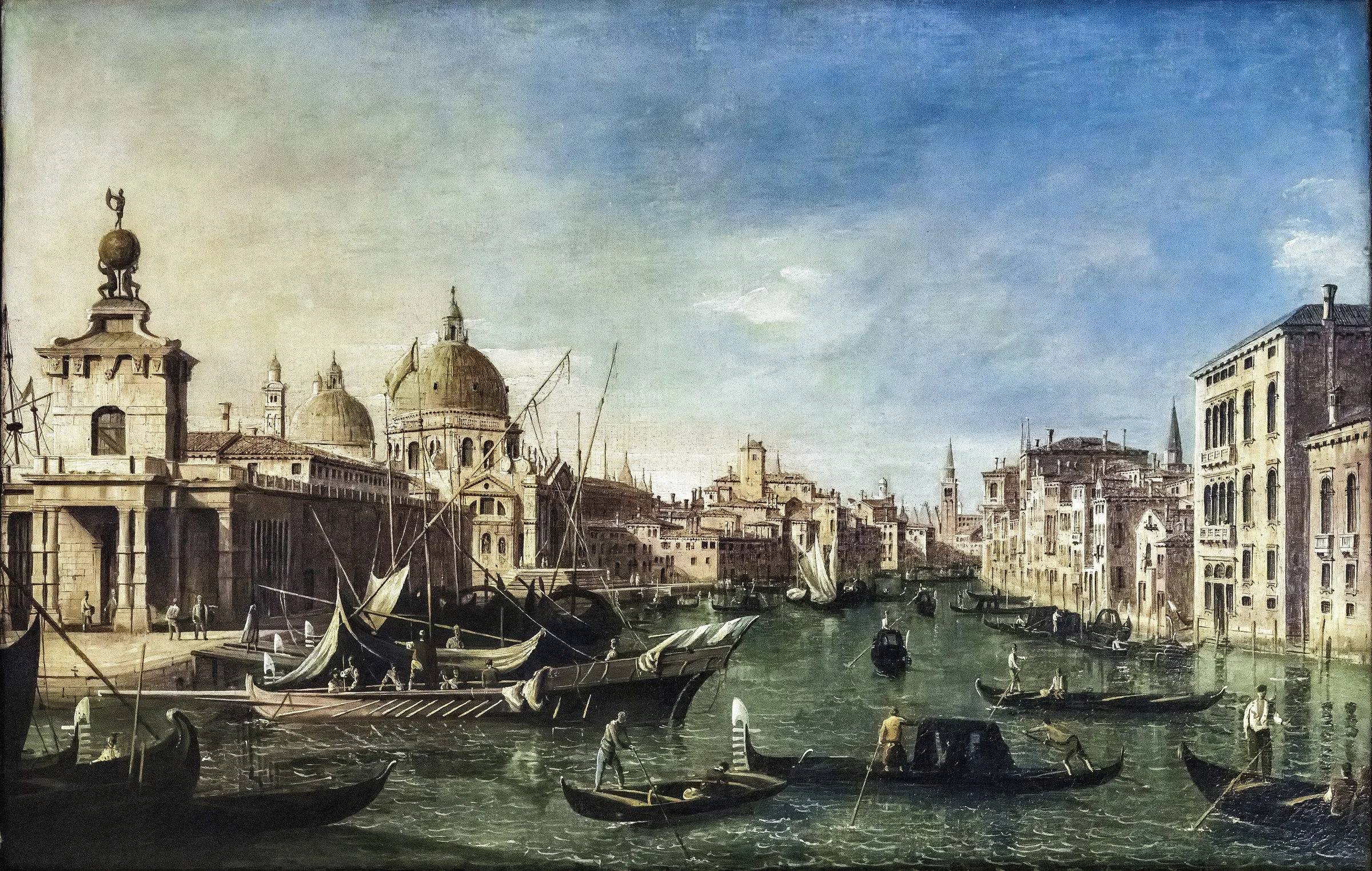
697–1797 · A thousand years between the lagoon and the Mediterranean
Republic of Venice
From Bergamo to Cyprus, a state made of sea, salt and trade that today spans seven countries. What remains are winged lions, star-shaped fortresses, words and dishes that connect shores once thought far apart.
What was the Serenissima?
Born in the early Middle Ages among the shallows of a lagoon – on 25 March 421, according to legend – Venice grew rich selling salt and became the great trading power between East and West. It first expanded by sea, along the Adriatic and as far as Crete and Cyprus: the Stato da Mar. Then, from the fifteenth century, it conquered the plain from Friuli to Bergamo: the Stato da Terra.
It was a republic, but not a democracy: power lay with the nobles of the Great Council, and the doge never became a monarch. Trade, diplomacy and a dense network of spies allowed it to cross a millennium almost unchanged, while lordships, monarchies and empires rose all around it.
Decline came with the Ottoman advance and the new Atlantic trade routes. In May 1797, facing Napoleon’s army, the Great Council voted to end the Republic without a fight. A few months later, with the Treaty of Campo Formio, its territories passed to Austria.
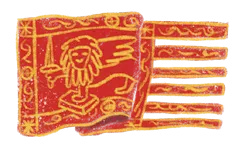
1,100years of history, from the first doge to the fall
120doges, from Paoluccio Anafesto to Ludovico Manin
7countries today, from Italy to Cyprus
2,500kilometres from Bergamo to Famagusta
Timeline
A thousand years in twenty dates. Scroll from left to right.
- 421
According to legend, Venice is born on 25 March, as communities fleeing wars on the mainland find shelter in the lagoon.
- 697
The first doge, the ‘duke’ of the Venetians, is elected (sources disagree on the date).
- 828
Two merchants smuggle the body of Saint Mark out of Alexandria: work begins on the basilica.
- 1000
Doge Pietro II Orseolo defeats the Narentine pirates, styles himself Duke of Dalmatia and starts the Marriage of the Sea.
- 1082
With the Golden Bull, Byzantium grants Venice a quarter in Constantinople and tax exemptions in dozens of ports.
- 1204
The Fourth Crusade takes Constantinople: Venice gets ‘a quarter and a half’ of the Empire. The Stato da Mar is born.
- 1298
At the battle of Korčula Marco Polo is captured by the Genoese: in prison he dictates his Travels.
- 1348
The Black Death kills almost half of Venice’s population. Lazarettos and quarantine are invented.
- 1381
The War of Chioggia ends, the last great clash with Genoa for control of the Mediterranean.
- 1420
Venice completes the conquest of its mainland, from Friuli to Lombardy. In 1409 it had bought Dalmatia for 100,000 ducats.
- 1453
Mehmed II takes Constantinople: centuries of wars with the Ottoman Empire begin.
- 1455
Movable-type printing arrives: Venice will become Europe’s publishing capital.
- 1492
Columbus reaches America: the centre of trade begins to shift towards the Atlantic.
- 1509
The defeat at Agnadello wipes out the mainland state within months. Venice holds out and wins it back.
- 1517
The Protestant Reformation begins. Venice too will have to accept the Inquisition.
- 1571
Cyprus falls to the Ottomans; the victory at Lepanto a few months later cannot make up for the loss.
- 1669
After a 21-year siege Candia surrenders: Crete is Ottoman. In Dalmatia, meanwhile, Venice expands.
- 1716
The battle of Corfu is the last clash with the Ottomans: Venice keeps the Ionian Islands.
- 1789
The French Revolution: for the Venetian patriciate, a worrying sign.
- 1797
Napoleon ends the Republic. With the Treaty of Campo Formio its territories pass to Austria.
Why it matters today
A legacy that no longer divides
For decades the Serenissima was read through the lens of nationalism: an invader for some, a myth for others. Today historians in Croatia, Greece and Cyprus paint a more nuanced picture, and that past can become a shared itinerary, free of resentment.
Young borders, layered identities
The borders we cross today are recent. In the world of the Serenissima what mattered was the city, the faith, the family; people spoke Venetian, Croatian, Greek, Albanian. It is worth remembering in a Europe where borders seem to be back in fashion.
Shared words and dishes
Piron and carega, fork and chair, are used in Croatia as in Greece; brodetto fish stew and sarde in saor connect ports hundreds of kilometres apart. The liveliest traces of the Republic are not in museums but in everyday life.
Fragile cities
Venice, the Bay of Kotor, Corfu: many cities of the Serenissima now struggle with mass tourism and climate change. Travelling slowly, off season and away from the beaten track is also a way of taking care of them.
The map
The shape of the Serenissima changed a great deal over the centuries. The Republic first expanded overseas – along the Adriatic, into the Aegean, as far as Crete and Cyprus – and only from the fifteenth century onto the mainland, from Friuli to Bergamo. It reached its greatest extent in the sixteenth century, then lost the islands of the Levant one by one. This map shows together all the territories held for a long time by Venice, even if in different periods: hover over each one to find out when it was Venetian.
A diachronic map with indicative borders: it shows territories held at different times, based on the map in our book. It is not meant as a precise historical map.
The places
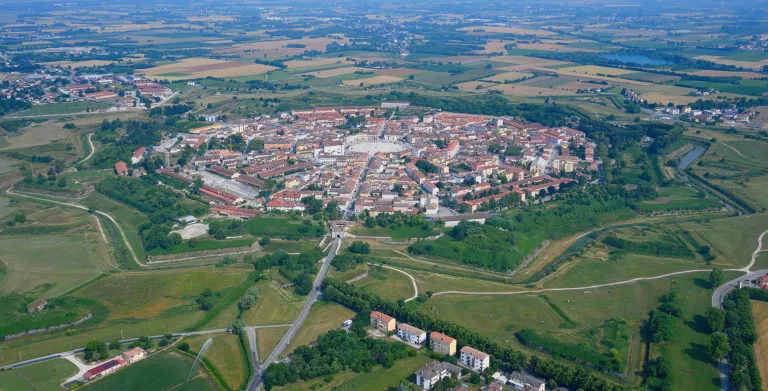 Palmanova, the fortress townThe star-shaped fortress town founded by Venice in 1593 to keep the Habsburgs at bay, never besieged by…Republic of Venice
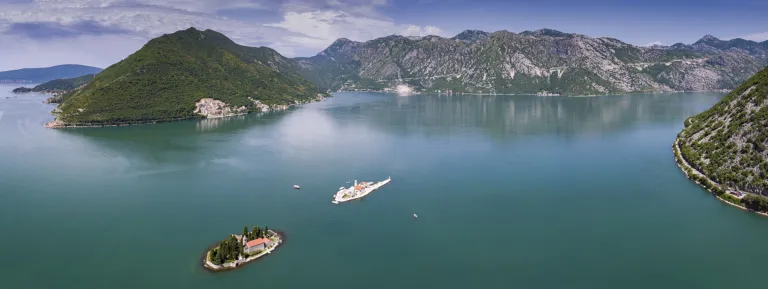 Perast, the most loyal standard-bearerThe Bay of Kotor town that guarded the war banner of the Serenissima and was the last to…Republic of Venice
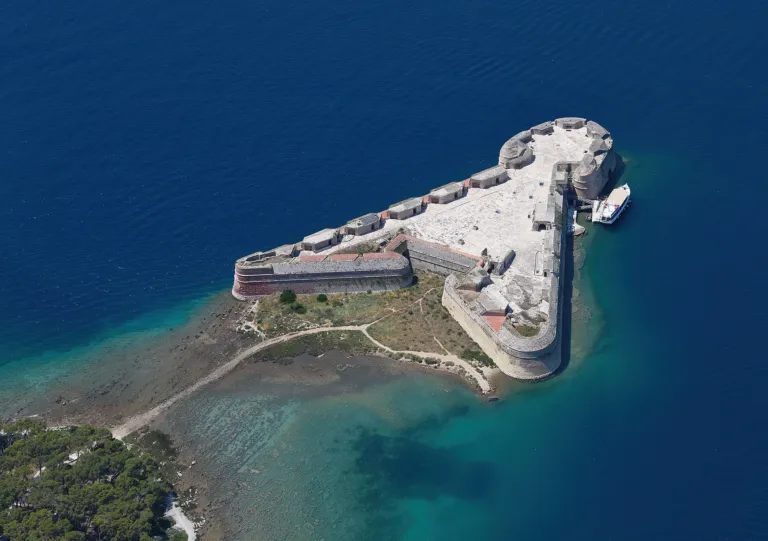 St Nicholas Fortress in ŠibenikThe 16th-century fortress at the mouth of the St Anthony Channel, UNESCO World Heritage Site since 2017, never…Republic of Venice
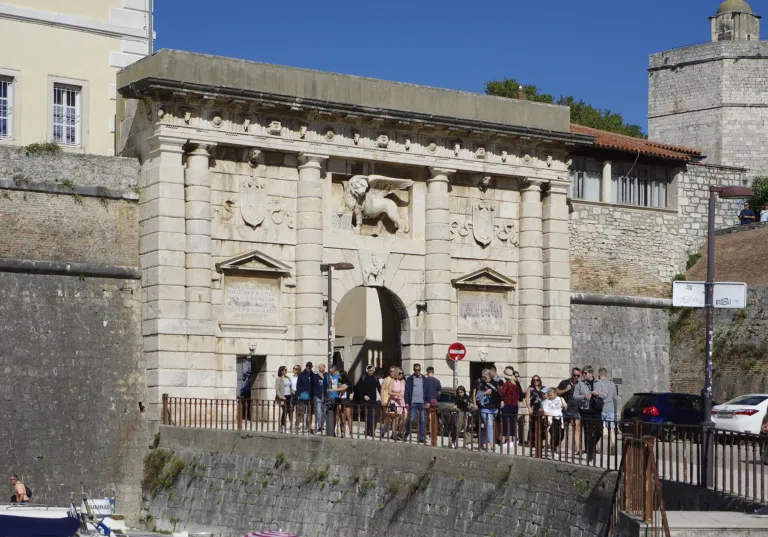 The Land Gate of ZadarThe monumental gate designed by Michele Sanmicheli in 1543, bearing the lion of St Mark: the entrance to…Republic of Venice
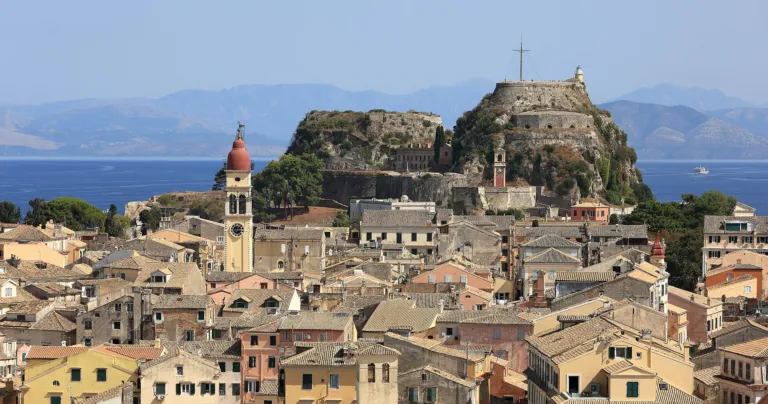 The Old Fortress of CorfuThe fortress on the twin-peaked headland, cut off from the town by a moat dug by the Venetians;…Republic of Venice
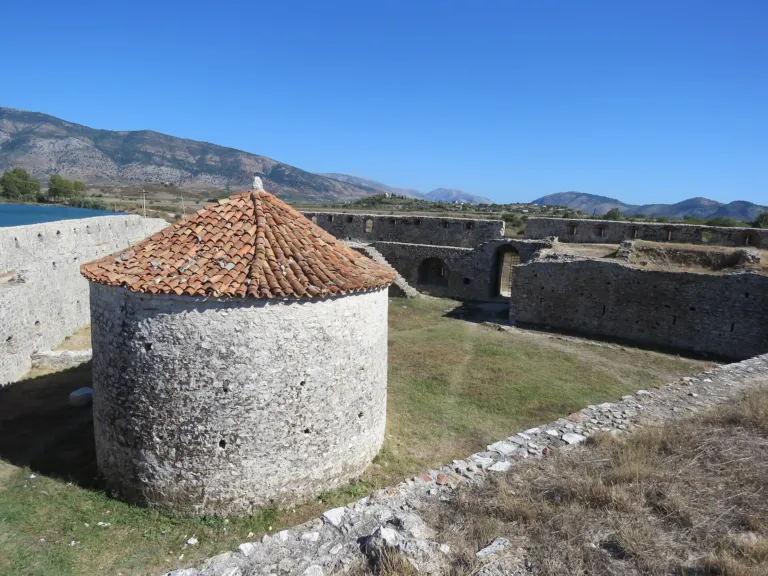 The Venetian castle of ButrintA Venetian tower and castle in the archaeological park of Butrint, on the Vivari Channel, facing Corfu.Republic of Venice
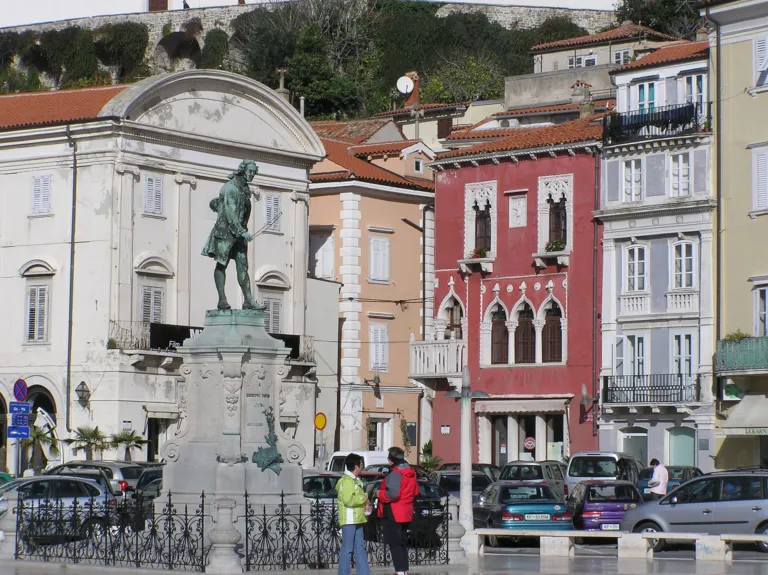 The Venetian House in PiranThe finest Venetian Gothic palazzo in town, built in the 15th century and overlooking Tartini Square.Republic of Venice
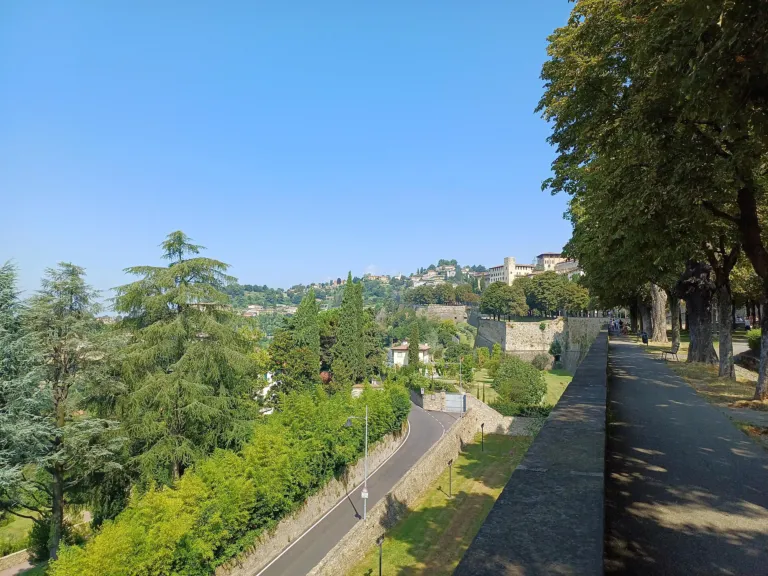 The Venetian walls of BergamoA six-kilometre circuit of walls with 14 bastions around the Upper Town, UNESCO World Heritage Site since 2017.Republic of Venice
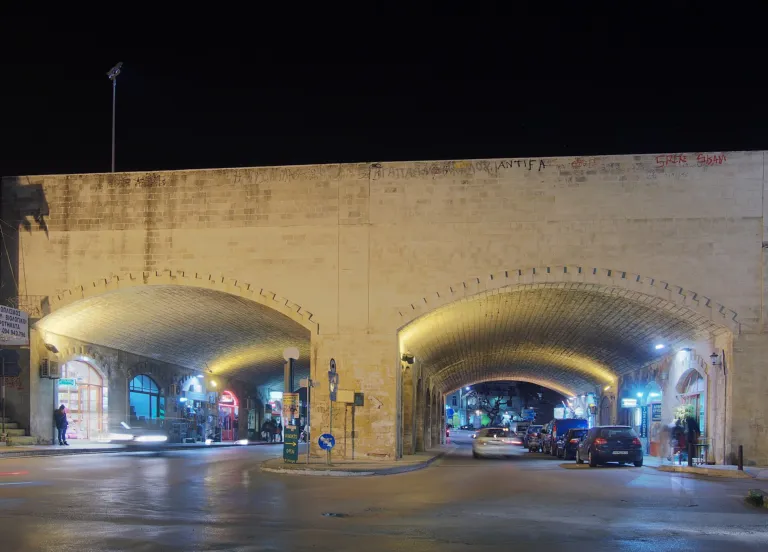 The Venetian walls of HeraklionA circuit of about five kilometres around the old town of Heraklion, scene of the longest siege in…Republic of Venice
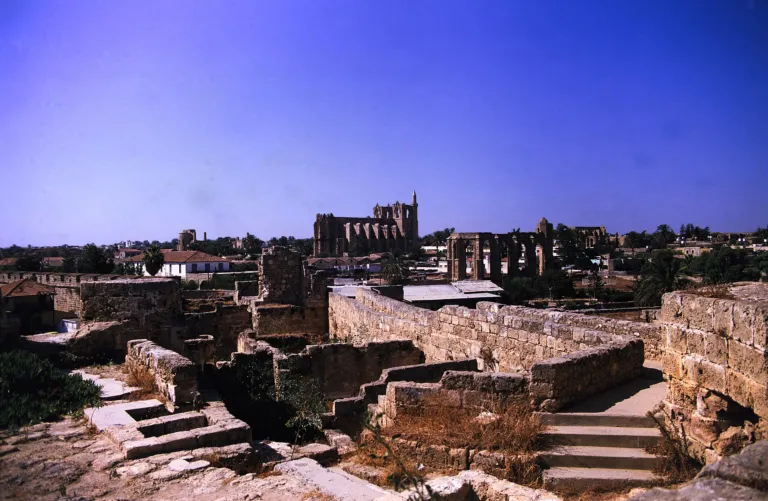 The walls of FamagustaThe Venetian walls with Othello's Tower by the harbour, the Serenissima's last stronghold on Cyprus, which fell in…Republic of Venice
Travel ideas
Three of the itineraries suggested in the book.
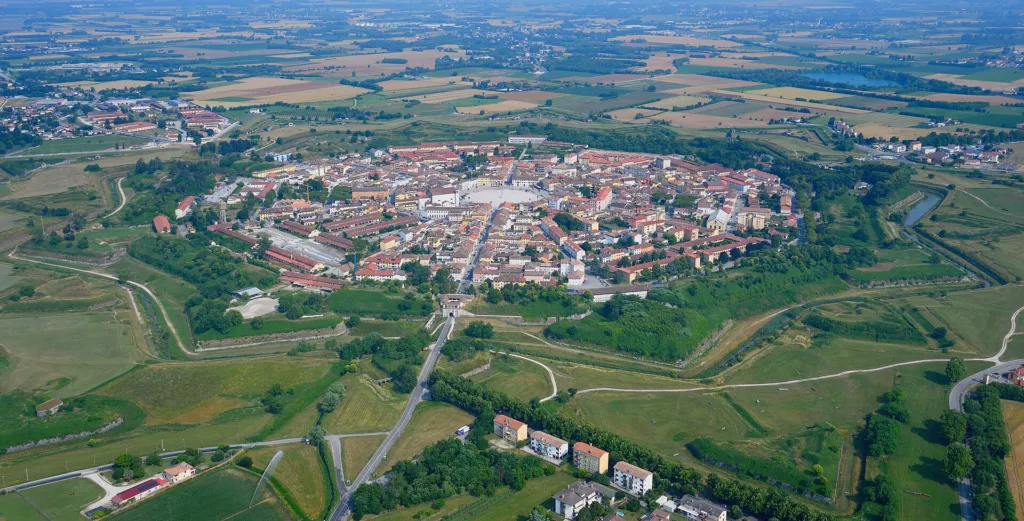

Towers and castles
Fortresses are the trademark of the Serenissima. Some form a single UNESCO site that runs from Bergamo to Kotor across Italy, Croatia and Montenegro, but there are many more: the two fortresses of Corfu, the star-shaped walls of Nicosia, the towers of Durrës and Butrint. Some never saw a siege, like Palmanova or St Nicholas Fortress in Šibenik; others endured terrible ones, like Famagusta and Candia.
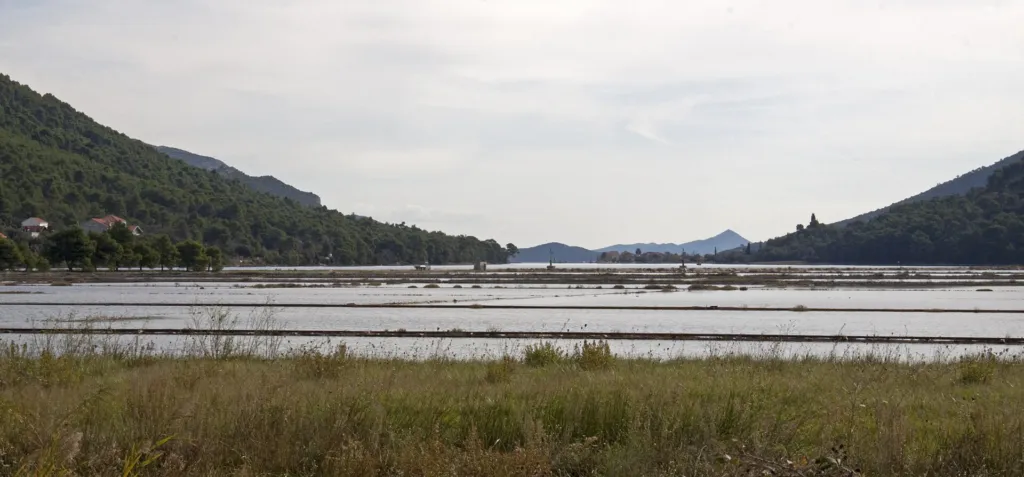

A Renaissance menu
Salt, pepper, spices: a food journey is essential to understand the Serenissima. You learn the value of salt in Piran or in Ston, which still has working salt pans and more than five kilometres of walls. Then come the spices of Corfiot cuisine, sarde in saor, bacalà alla vicentina, Dalmatian pašticada and Corfiot bourdeto, in bàcari, tavernas and konobas.
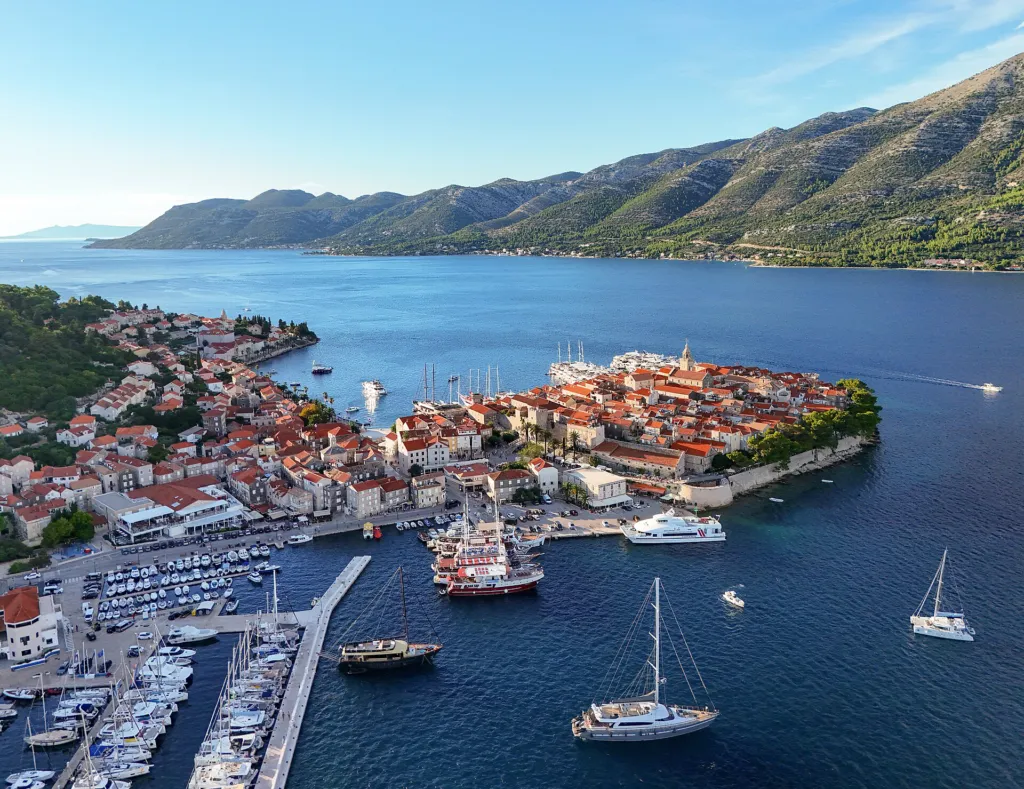

By sea
The best way to visit the Serenissima is by boat. In Venice the gondola and the bragozzo, in Rovinj the batana, in Dalmatia the falkuša of Vis and the sagitta of Omiš; seafaring tradition is on show at the museum in Betina, on Murter. Ferries link one Croatian port to the next, but in September a sailing boat is worth considering.
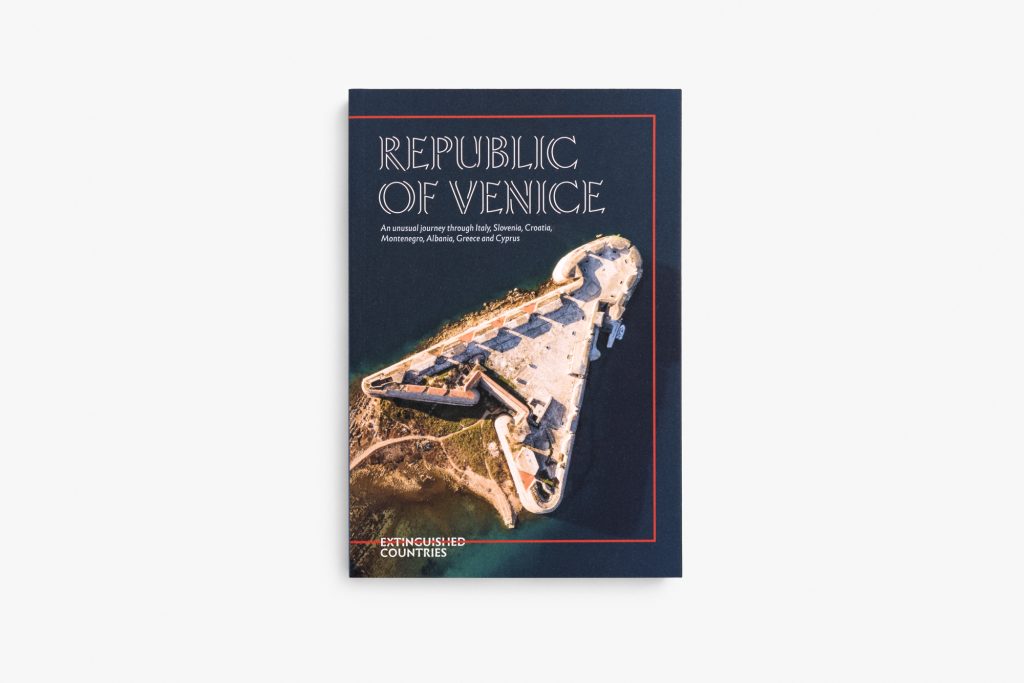
The book
Republic of Venice. An unusual journey through Italy, Slovenia, Croatia, Montenegro, Albania, Greece and Cyprus.
The first volume of the Extinguished Countries series: a 2,500-kilometre itinerary built on hundreds of interviews with historians, cooks, craftspeople and residents of the former territories of the Serenissima.
Prices on 10 Sep 2026: paperback 25,00 € · eBook 15,26 €
Voices from the book
“The history of the Bay of Kotor cannot be divided along national lines.”
Lovorka Čoralić, historian
“Inside the bastions you clearly feel you are in the same city.”
Pafsanias Karathanasis, anthropologist, on Nicosia
“In recent decades historians prefer to speak of Venetian ‘possessions’ rather than ‘colonies’.”
Gerassimos Pagratis, historian
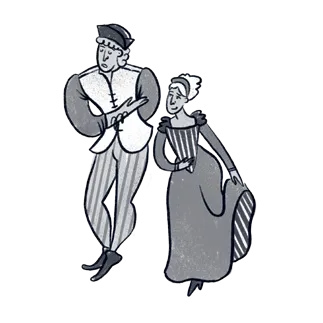
Did you know?
“Ciao” comes from the Venetian s-ciavo, “(I am your) slave”: a formula of respect that over the centuries became the most familiar Italian greeting. From there it went around the world: it is čao in Croatia, Serbia and Slovenia, tschau in Switzerland, chau in Argentina, tchau in Brazil.
Frequently asked questions
When did the Republic of Venice begin and end?
According to legend, Venice was founded on 25 March 421; tradition has the first doge elected in 697. The Republic ended in May 1797, when the Great Council voted to dissolve itself in front of Napoleon’s troops. With the Treaty of Campo Formio (October 1797) its territories passed to Austria.
Which territories did the Serenissima control?
The Stato da Terra, in north-eastern Italy from Crema and Bergamo to Friuli, and the Stato da Mar: Istria, Dalmatia, the Bay of Kotor and the Albanian coast, the Ionian Islands, Crete, Cyprus and, for shorter periods, the Peloponnese and several Aegean islands. Today those territories belong to seven countries.
Why was Venice called the “Serenissima”?
The most widely accepted explanation is that the adjective comes from the honorific title “serenissimo” given to the doge and later extended to the state. Others link it to the stability of a Republic that went through a millennium without major internal upheavals.
Who governed the Republic of Venice?
It was an aristocratic republic: power lay with the nobles of the Great Council, on which the Senate, the Council of Ten and the other magistracies depended. The doge, elected for life through a complicated system of lots, had a mainly representative role.
Where can you still see the Venetian legacy today?
In the architecture, from loggias to Gothic palaces, in the lions of Saint Mark and in the fortresses: since 2017 the Venetian defence works in Italy, Croatia and Montenegro have been a UNESCO World Heritage Site. But also in dialects, cuisine and festivals, such as regattas and historical re-enactments.
Every month, new travel ideas from extinguished countries
Places, stories and book news, straight to your inbox.