
The Venetian walls of Bergamo
Extinguished country: Republic of Venice Fortresses
What remains
A six-kilometre circuit of walls with 14 bastions around the Upper Town, UNESCO World Heritage Site since 2017.
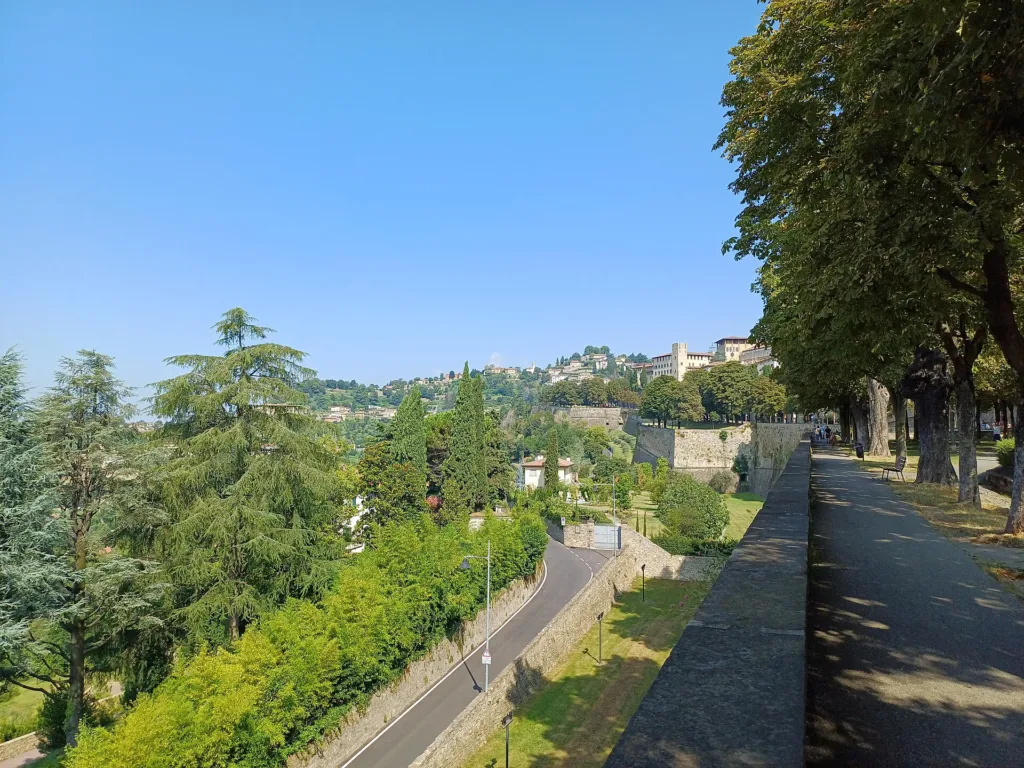
Mura venete de Bèrghem · Photo: Radosław Botev, CC BY 3.0 pl, via Wikimedia Commons
Approaching Bergamo from the plain, the upper town appears enclosed in a ring of stone. These are the Venetian walls, the clearest sign of a border: here, a few kilometres from Milan, the Serenissima reached its westernmost point, 250 kilometres from the lagoon and almost 2,500 from its easternmost possession, the stronghold of Famagusta on the island of Cyprus.
The western frontier of the Serenissima
Bergamo and its valleys became part of the Republic of Venice in the fifteenth century and remained so for 350 years. Unused to governing mountain areas, the Venetians left the valleys broad autonomy; they negotiated, and often quarrelled, with the city, calling on Venice to mediate. The Bergamo nobility, on the other hand, quickly merged with that of the capital: about a quarter of the wealthiest families bought their way into the Golden Book and often moved to the lagoon.
Trade with northern Europe also passed through here: the Via Priula, opened in 1593 through the Brembana valley, allowed the Venetians to reach the Grisons without paying duties to the Milanese. The actual border ran a little further on, in the mountains of the Imagna valley, where the hamlet of Arnosto still preserves the old Venetian customs house with the motto of St Mark.
Six kilometres of stone against Milan
Its frontier position came at a price: in the fifteenth century Bergamo suffered more than ten invasions. In the second half of the sixteenth century, Venice therefore enclosed it in a modern fortress. The circuit is six kilometres long, with 14 bastions and a hundred gun emplacements, and hides powder magazines, underground chambers and military passages. Since 2017 it has been part of the UNESCO site of the Venetian works of defence, together with Palmanova, Zadar, Šibenik and Kotor.
Inside the walls, in Piazza Vecchia, the winged lion dominates the Palazzo della Ragione, next to the fountain donated by the last Venetian podestà, Alvise Contarini. Not far away, the Colleoni Chapel tells the story of Bartolomeo Colleoni, the condottiere who served both Venice and Milan, loved and hated by the Serenissima.
A Venetian city in Lombardy
Today Bergamo is Lombard, and the walls have become the favourite walk of its inhabitants, especially at sunset, when the view opens over the plain. The same stones that were meant to keep the armies of the Duchy of Milan at bay now welcome those who ride the funicular up from the lower town.
The bond with Venice, however, should not be read with today’s eyes. In the Stato da Terra, civic identities remained very strong until the end of the Republic, and the sense of unity felt today in the Veneto, where the flag of St Mark has become the regional flag, did not exist at the time: “the word ‘Veneto’ was invented by the Austrians,” the historian Gian Maria Varanini recalls in the book. In the chapter on the western frontier, the book also tells the story of Crema, a Venetian enclave in Milanese territory, linked to Bergamo by a single road.
A diachronic map with indicative borders: it shows territories held at different times, based on the map in our book. It is not meant as a precise historical map.
In the book
Republic of Venice — Chapter “Italy”
Prices on 10 Sep 2026: paperback 25,00 € · eBook 15,26 €
Continue the journey
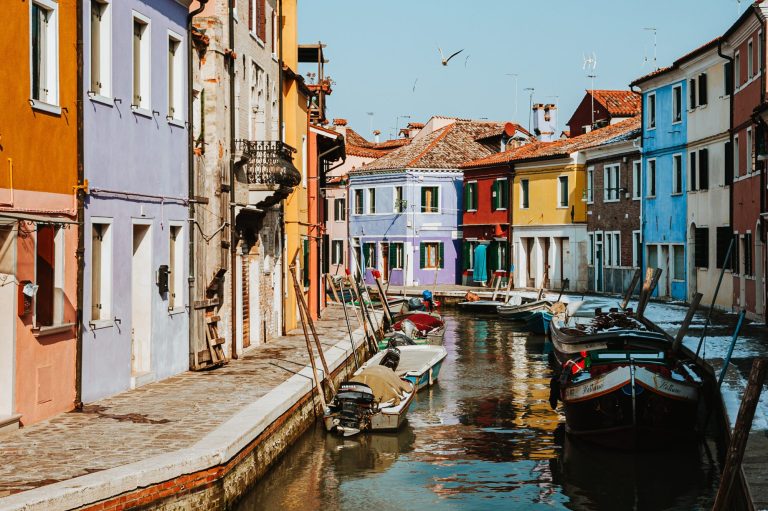 Our guided group tour across the Republic of Venice
 10 years of Kliofest
Extinguished Countries is a collaborative project. Have you spotted any inaccuracies or errors in this page? Write to us at explore [at] extinguishedcountries [dot] com