
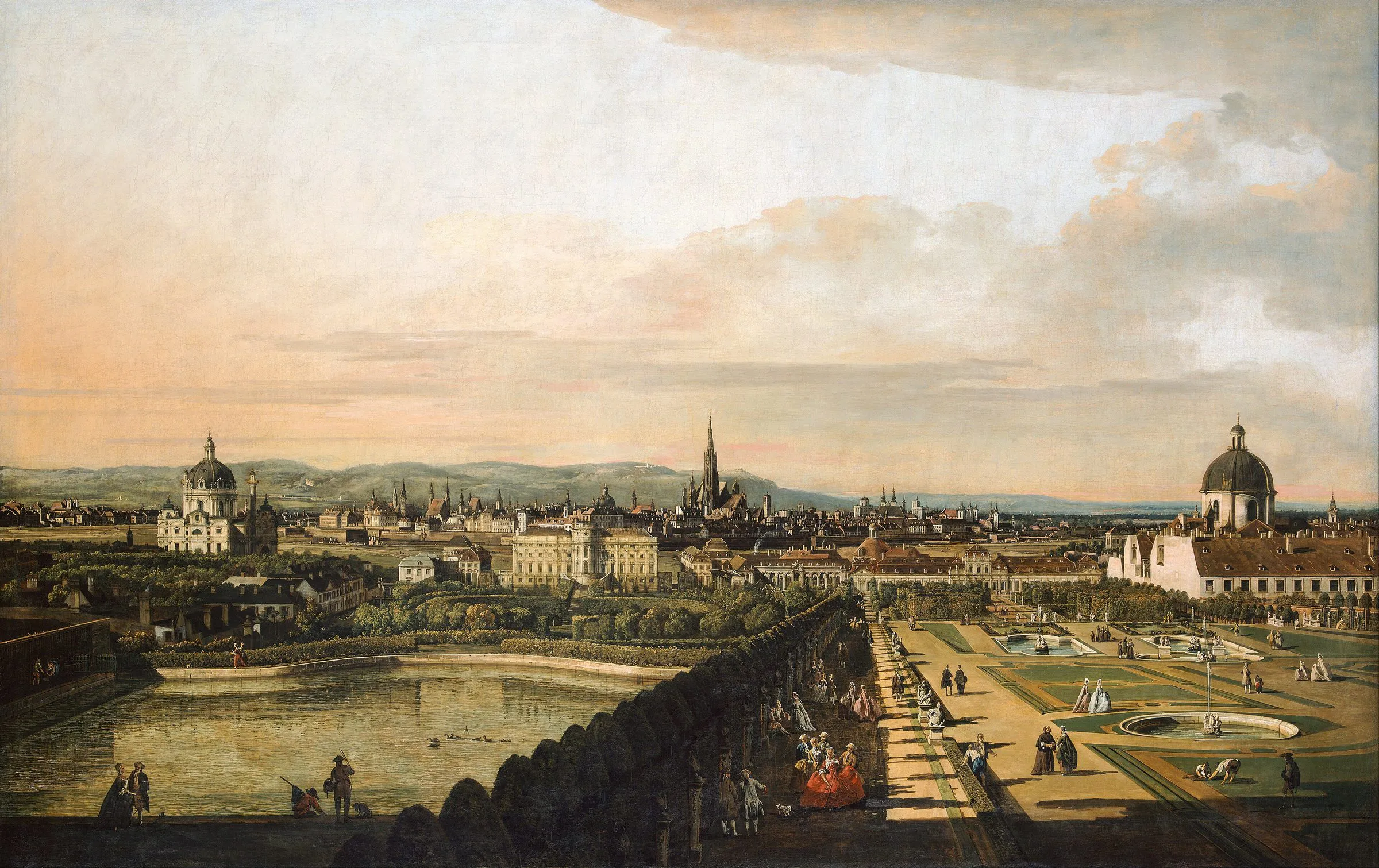
1273–1918 · Six centuries at the heart of Europe
Habsburg Empire
From Montenegro to Poland, from Austria to Ukraine: a multilingual state of more than 50 million people that today spans thirteen countries. What remains are cafés and theatres, railways and yellow palaces, words and dishes you find from Trieste to Lviv.
What was the Habsburg Empire?
It all begins in Switzerland, around Habsburg Castle, the “hawk’s castle”. From the thirteenth century the family moves east, acquires Austria and, through marriages more than wars, assembles a mosaic of kingdoms, duchies and counties. For centuries it is a dynastic state: the ruler treats each territory as a personal possession and negotiates taxes and recruits with the local nobility.
A centralised Habsburg state only emerges in the second half of the eighteenth century, under Maria Theresa and her sons. In 1804 it becomes the Austrian Empire and in 1867, with the Compromise with Hungary, it splits in two: Cisleithania, ruled from Vienna, and Transleithania, the Kingdom of Hungary with Budapest as its capital. Bosnia and Herzegovina, annexed in 1908, belongs to neither.
On the eve of the First World War, Austria-Hungary is one of Europe’s great states: Catholics, Protestants, Orthodox, Jews and Muslims; German, Hungarian, Czech, Polish, Ukrainian, Romanian, Serbo-Croatian, Slovene, Slovak, Italian, Yiddish… The war, which starts in Sarajevo in 1914, wipes it off the map in four years.
645years, from Rudolf I to the end of the monarchy
50million inhabitants on the eve of 1914
11official languages recognised in the empire
13countries today, from Italy to Ukraine
Timeline
From the hawk’s castle to the end of the empire, in twenty dates. Scroll from left to right.
- 1020
Radbot of Klettgau builds Habsburg Castle in Aargau (Switzerland): the name supposedly comes from a hawk, Habicht, perched on the hill.
- 1273
Rudolf I of Habsburg is elected King of the Romans. The family gains Austria, Styria and Carniola and, driven out of Switzerland, moves east.
- 1452
Frederick III is crowned emperor: from now on almost every emperor will be a Habsburg. The marriage policy begins.
- 1519
Charles V is elected emperor: the sun ‘never sets’ on his empire, from the Low Countries to the New World.
- 1529
After the battle of Mohács, Suleiman the Magnificent besieges Vienna. The city holds out.
- 1618
The Defenestration of Prague starts the Thirty Years’ War, which will ravage Europe.
- 1683
Second Ottoman siege of Vienna: the victory led by John III Sobieski marks the start of Ottoman decline in Europe.
- 1700
The last Spanish Habsburg dies: Iberia passes to the Bourbons. With the Peace of Karlowitz (1699) Vienna gains Hungary.
- 1713
The Pragmatic Sanction guarantees the lands’ indivisibility and the throne for Maria Theresa. In 1718 the Banat, Vojvodina and Belgrade follow.
- 1740
Maria Theresa takes the throne and defends it with Hungarian help. Under her and her sons the modern state is born.
- 1772
With the first partition of Poland, Austria gains Galicia and Lviv.
- 1804
Francis II proclaims himself Emperor of Austria. Two years later, defeated by Napoleon, he dissolves the Holy Roman Empire.
- 1815
The Congress of Vienna gives the Habsburgs the lands of the Republic of Venice: the Kingdom of Lombardy–Venetia is born.
- 1848
Revolutions shake the empire from Milan to Budapest. Metternich resigns and Franz Joseph takes the throne.
- 1867
The Austro-Hungarian Compromise creates Austria-Hungary: Cisleithania ruled from Vienna, Transleithania from Budapest.
- 1878
The Congress of Berlin gives the empire the administration of Bosnia-Herzegovina, occupied after months of fighting.
- 1908
Vienna annexes Bosnia-Herzegovina: Serbia and Russia protest, in a diplomatic crisis that ends only in 1909.
- 1914
In Sarajevo Gavrilo Princip kills the heir to the throne, Franz Ferdinand. A month later the First World War begins.
- 1918
Charles I accepts the armistice and withdraws from political life. In 1919 he is sent into exile.
- 1920
The treaties of Saint-Germain (1919) and Trianon (1920) carve up the empire: new borders in the heart of Europe.
Why it matters today
Myth and counter-myth
For some it was the “prison of nations”, for others a golden age. In Serbia and Bosnia the empire is often remembered as an occupier, Trieste looks back with nostalgia, and in Hungary the Treaty of Trianon still weighs heavily. The book sets these memories side by side, without choosing one version.
A Europe before Europe
A state with eleven official languages and laws designed to let them coexist: for historian Pieter M. Judson it is proof that living together across linguistic differences is not impossible. A useful lesson as nationalism makes itself heard again.
Does Mitteleuropa exist?
Geographically it doesn’t, yet you recognise it at once: in cafés with Thonet chairs, in yellow railway stations, in the look-alike theatres of Fellner & Helmer, in dumplings and strudel. Looking for where Central Europe begins and ends is the thread running through this journey.
Galicia’s European destiny
In Lviv the Habsburg legacy is the memory of an era of close integration with Europe. Since Russia’s invasion of Ukraine, that past has become for many one more argument for the country’s European aspirations.
The map
The shape of the Habsburg state changed many times between the eighteenth century and 1918: Belgium and Lombardy, Silesia and Veneto entered and left the empire’s borders. As in the book, we chose the map of 1914, the last metamorphosis of the Habsburg state, by then known as Austria-Hungary, with Austrian Cisleithania, the Kingdom of Hungary and Bosnia and Herzegovina. Hover over each part to see its name and period.
A diachronic map with indicative borders: it shows territories held at different times, based on the map in our book. It is not meant as a precise historical map.
The places
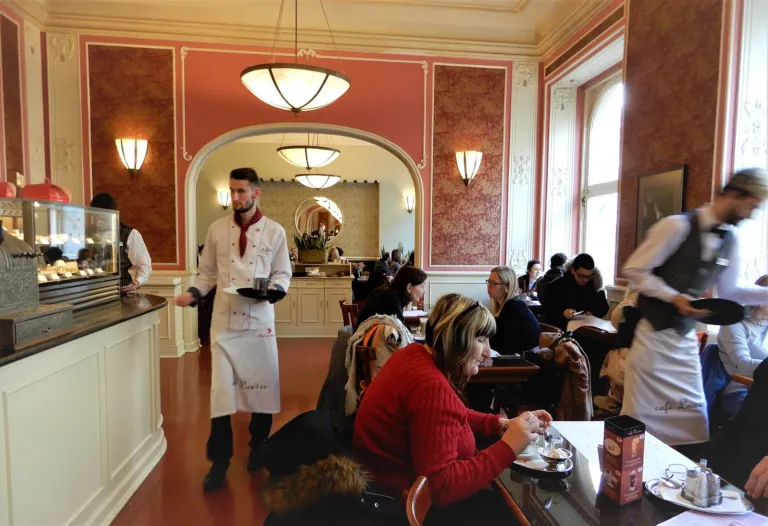 Café Louvre in PragueCaffè storico aperto nel 1902 sulla Národní, frequentato da Albert Einstein e dalle intellettuali praghesi del primo Novecento.Habsburg Empire
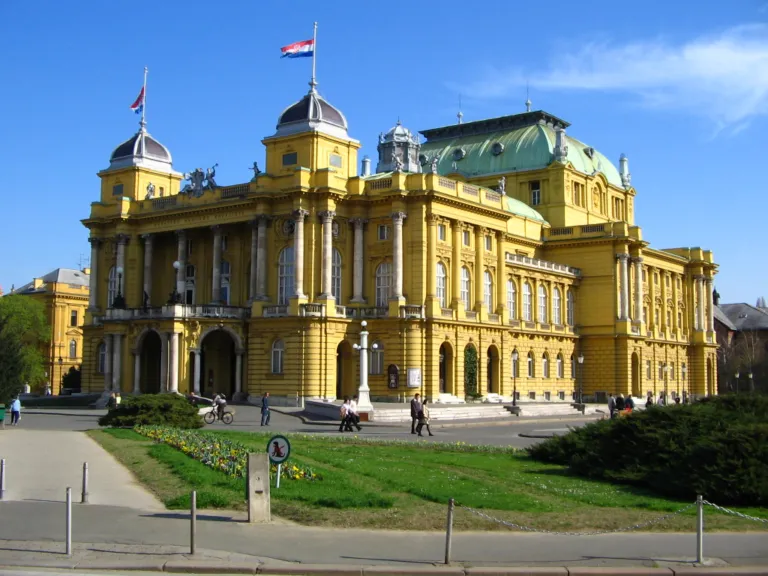 Croatian National Theatre in ZagrebIl teatro neobarocco di Fellner & Helmer, inaugurato nel 1895 alla presenza di Francesco Giuseppe.Habsburg Empire
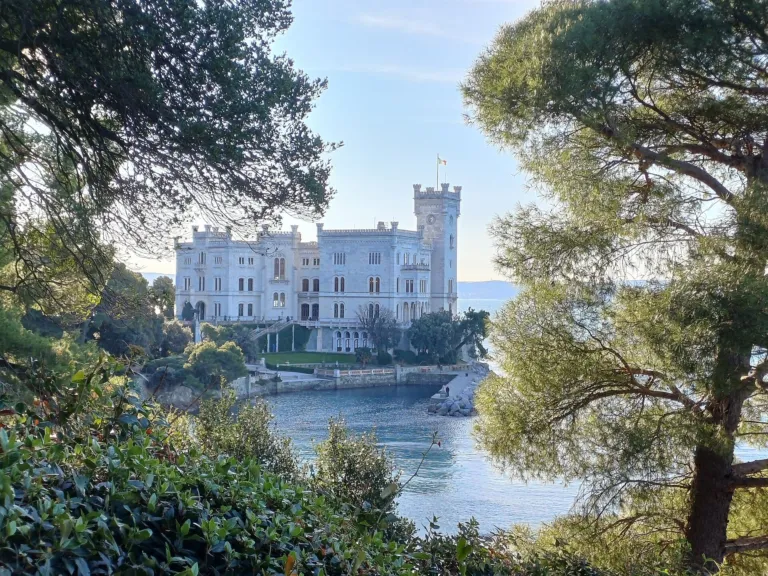 Miramare CastleIl castello sul mare voluto dall’arciduca Massimiliano d’Asburgo, da cui partì nel 1864 per diventare imperatore del Messico.…Habsburg Empire
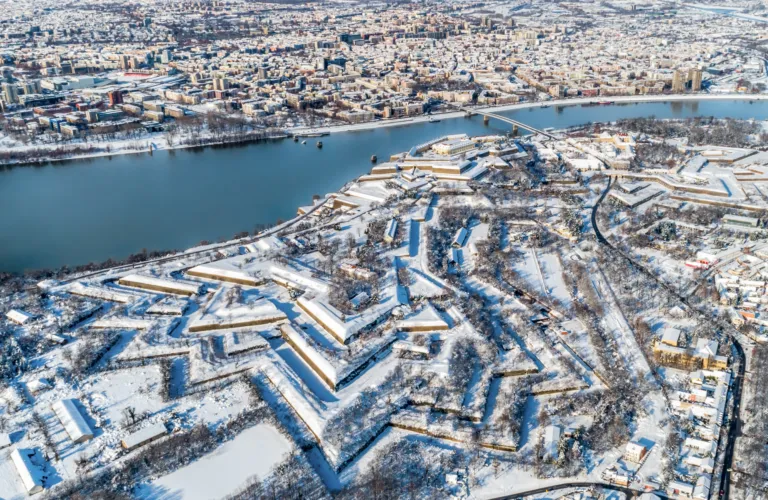 Petrovaradin FortressLa grande fortezza asburgica sul Danubio di fronte a Novi Sad, costruita tra il 1692 e il 1780,…Habsburg Empire
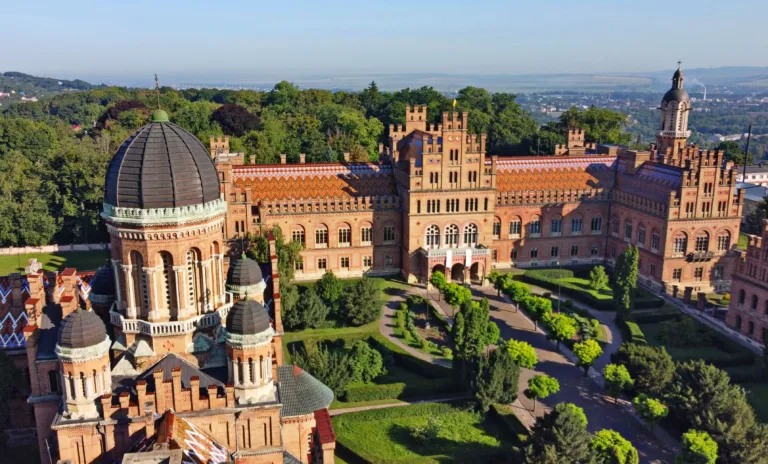 Residence of the Metropolitans in ChernivtsiIl complesso costruito tra il 1864 e il 1882 dall’architetto ceco Josef Hlávka, oggi sede dell’università; patrimonio UNESCO…Habsburg Empire
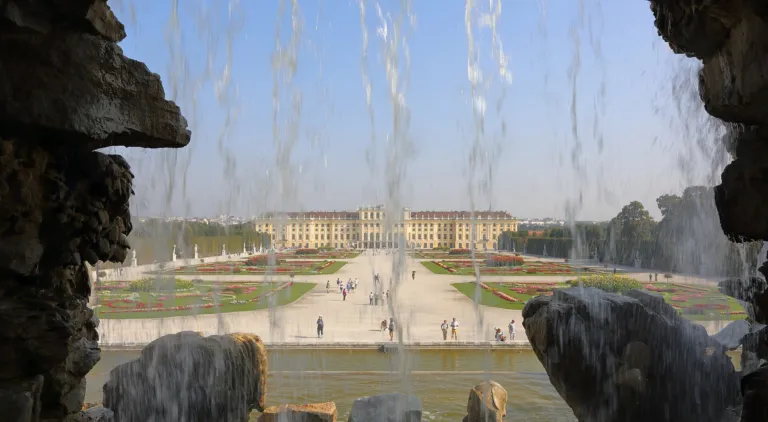 Schönbrunn PalaceLa residenza estiva degli Asburgo alle porte di Vienna, con i suoi giardini e la Gloriette; patrimonio UNESCO…Habsburg Empire
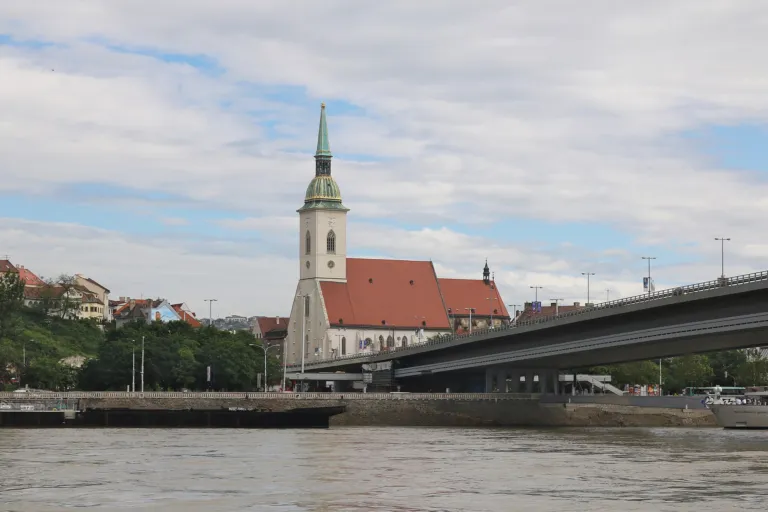 St Martin’s Cathedral in BratislavaLa chiesa delle incoronazioni: tra il 1563 e il 1830 vi furono incoronati undici re e otto regine…Habsburg Empire
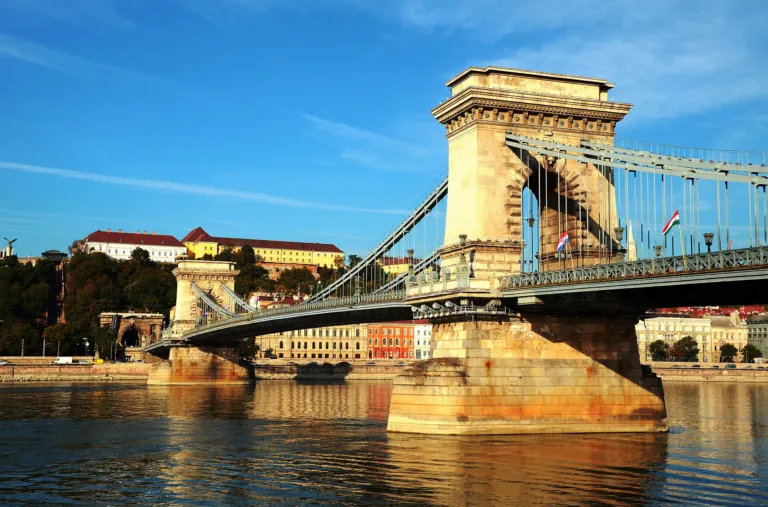 The Chain Bridge in BudapestIl primo ponte stabile tra Buda e Pest, terminato nel 1849 e voluto da István Széchenyi, ricostruito dopo…Habsburg Empire
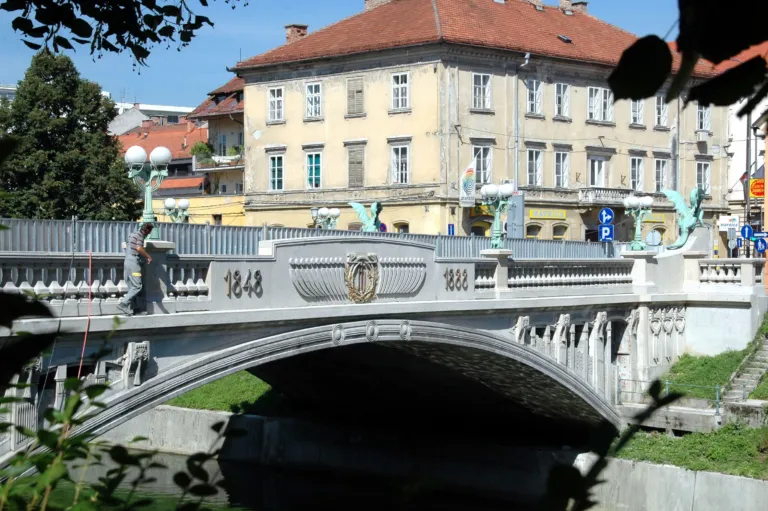 The Dragon Bridge in LjubljanaInaugurato nel 1901 come Ponte Francesco Giuseppe, durante la ricostruzione di Lubiana dopo il terremoto del 1895; i…Habsburg Empire
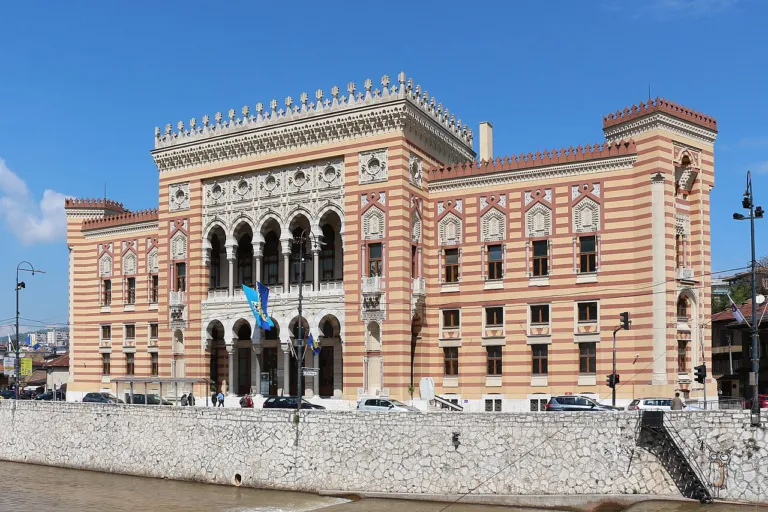 Vijećnica, Sarajevo City HallIl municipio in stile pseudo-moresco costruito dall’Austria-Ungheria nel 1896, poi Biblioteca nazionale, incendiato nel 1992 e riaperto nel…Habsburg Empire
Travel ideas
Three of the itineraries suggested in the book.
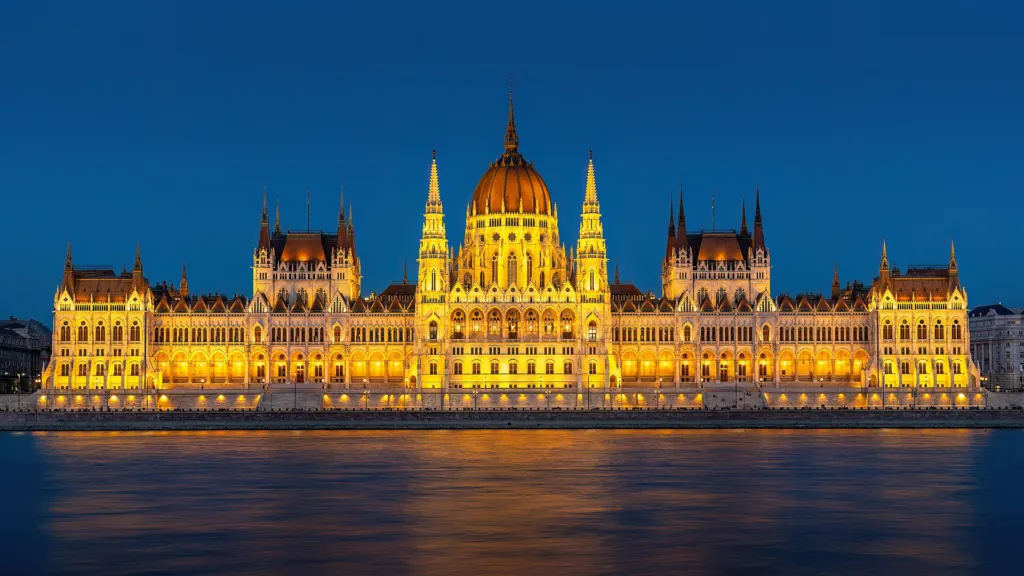

Along the Danube
The imperial river par excellence, which inspired Strauss’s waltz. By bike on the EuroVelo 6 cycle route, on a cruise to the Iron Gates or in stages: the Donauinsel in Vienna, the Parliament in Budapest, the beach in Novi Sad and Zemun, opposite Belgrade, where the Ottoman Empire once began.
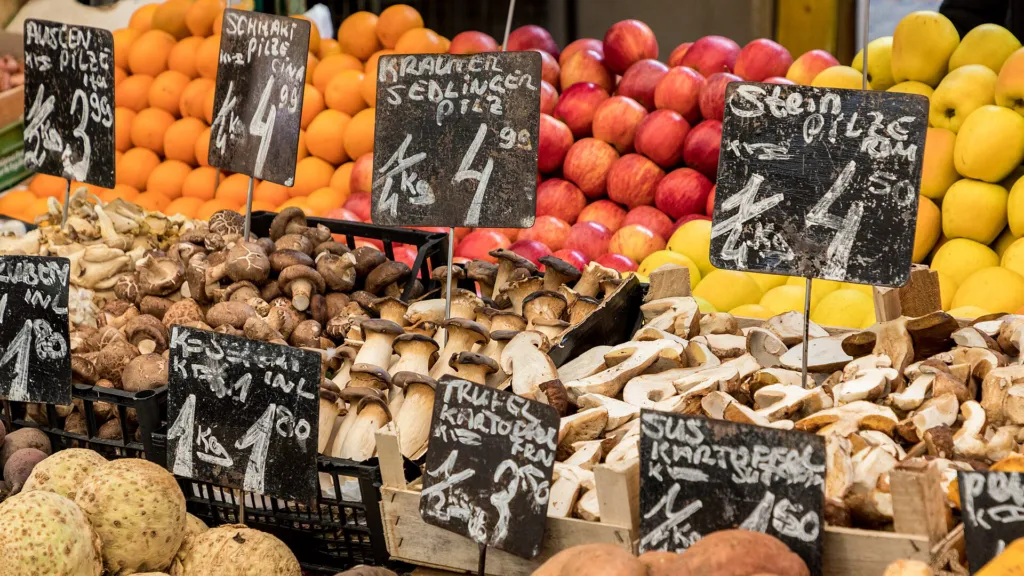

At the table
Palačinke and Sachertorte, goulash and Wiener Schnitzel: wherever you go, some dishes will follow you. Trentino’s canederli become Knödel in Austria and knedle in Croatia, cremeschnitte turns into krempita, kremšnita and kremówka. And every proper lunch starts with a clear broth.
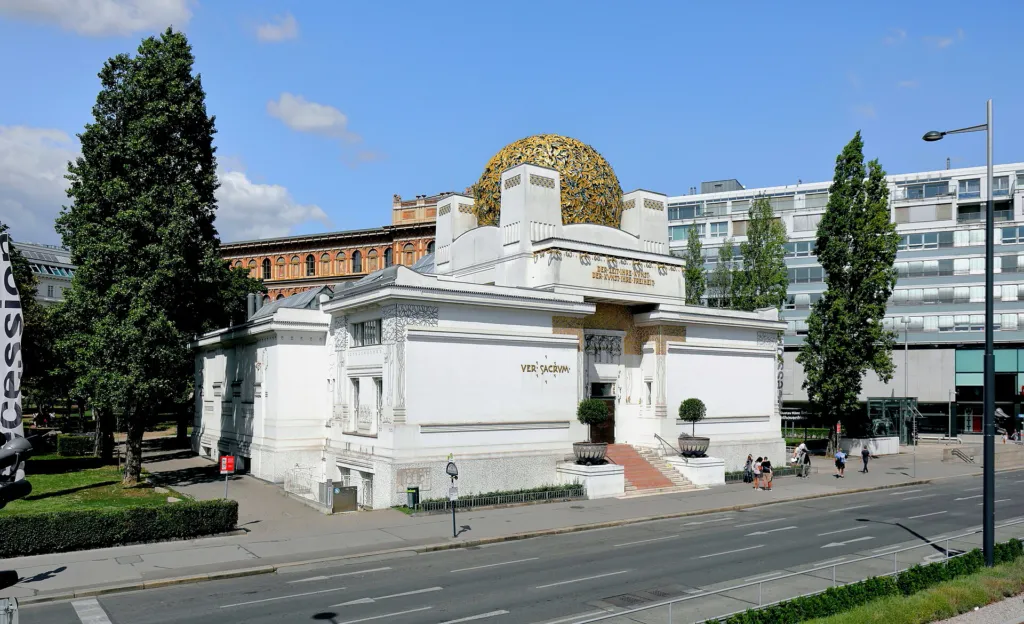

From neo-Baroque to Secession
Feel like you have seen that theatre before? Fellner & Helmer designed dozens of them, from Croatia to Ukraine. Then, in 1897, came the Vienna Secession: look for buildings by Otto Wagner, Josef Hoffmann, Ödön Lechner and Max Fabiani, and paintings by Klimt and Schiele.

The book
Habsburg Empire. A waltz between past and present at the heart of Europe.
The second volume of the Extinguished Countries series, after the Republic of Venice: a journey from Montenegro to Poland, from Austria to Ukraine, built on hundreds of interviews with historians, cooks, architects and residents of the former empire. By Giovanni Vale, Rebecca Duras, Laury Chinzi and Luke Kennedy.
Prices on 10 Sep 2026: paperback 25,00 € · eBook 15,00 €
Voices from the book
“The idea that Habsburg rule over these regions was somehow colonial has no historical basis.”
Pieter M. Judson, historian
“Geographically speaking, Central Europe does not exist, but it is a real concept in the minds of those who use it.”
Luka Ivan Jukić, historian
“In traditional Swiss historiography the Habsburgs are cast as the villains.”
Francesco Cerea, historian
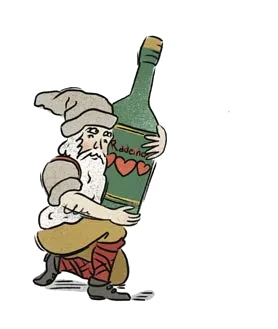
Did you know?
The spritz has Habsburg roots. Topping up white wine with sparkling water was a common habit across the empire, and the name comes from the German spritzen, “to splash”. The cocktail with Aperol or Campari only appeared after the Second World War, but the gesture stayed everywhere: it is spritz in Italy, Spritzer in Austria, gemišt in Croatia, špricer in Slovenia, Serbia and Bosnia. In Hungary it is the fröccs, but that is another story.
Frequently asked questions
Are the Habsburg Empire and Austria-Hungary the same thing?
Not exactly. The Habsburgs ruled various territories for more than six centuries; the Austrian Empire was created in 1804. Austria-Hungary is the name of the state after the Compromise of 1867, when the empire split into two parts with a single monarch, a single market and a common foreign, defence and financial policy. It is the last form of the Habsburg state, the one shown on the 1914 map.
Where does the name Habsburg come from?
From Habsburg Castle, built around 1020 in today’s Swiss canton of Aargau. According to tradition the name comes from a hawk (Habicht) perched on the hill: “Habichtsburg”, the hawk’s castle. The family lost the castle as early as the fifteenth century.
Which of today’s countries were part of the Habsburg Empire in 1914?
Austria, Hungary, Slovakia and almost all of the Czech Republic, plus parts of Italy, Slovenia, Croatia, Bosnia and Herzegovina, Montenegro, Serbia, Romania, Poland and Ukraine. The book travels through all thirteen.
When and how did the empire end?
With defeat in the First World War. In November 1918 Emperor Charles I accepted the armistice and withdrew; in 1919 he was forced into exile. The treaties of Saint-Germain (1919) and Trianon (1920) drew the borders of the new states.
What remains of the Habsburg legacy today?
A great deal: Viennese cafés, neo-Baroque and Secession architecture, railway stations and lines, a cuisine of strudel and dumplings, German words in the languages of Central Europe. But also divided memories, which the book tells country by country.
Every month, new travel ideas from extinguished countries
Places, stories and book news, straight to your inbox.